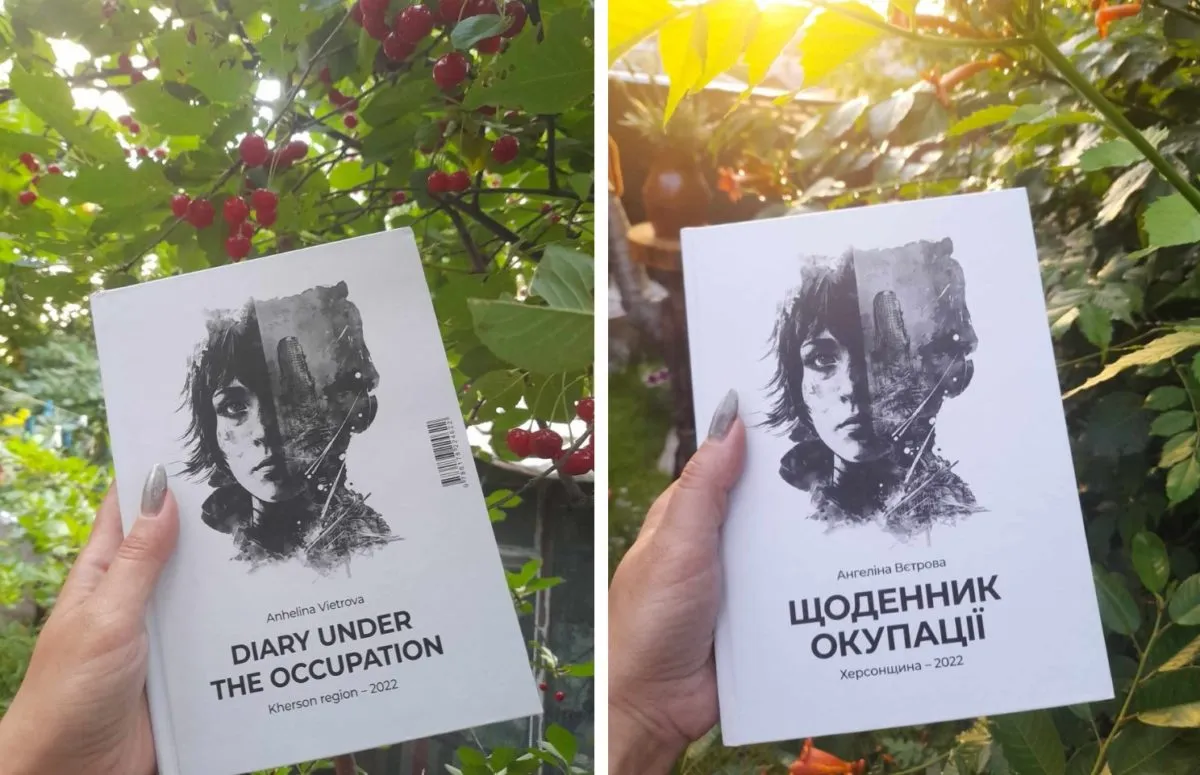
Angelina Vetrova has captured in print the extraordinary true stories of life under occupation. Drawing on her own experiences – and on the daily messages she sent her sons through social media – Angelina has fashioned a book that stands not only as memoir but as a vital document of our times. “Occupation Diary: Kherson Region 2022” preserves the unvarnished truth of events that forever altered countless lives. In giving voice to her own family’s trials, she offers a testimony shared by so many enduring these same horrors.
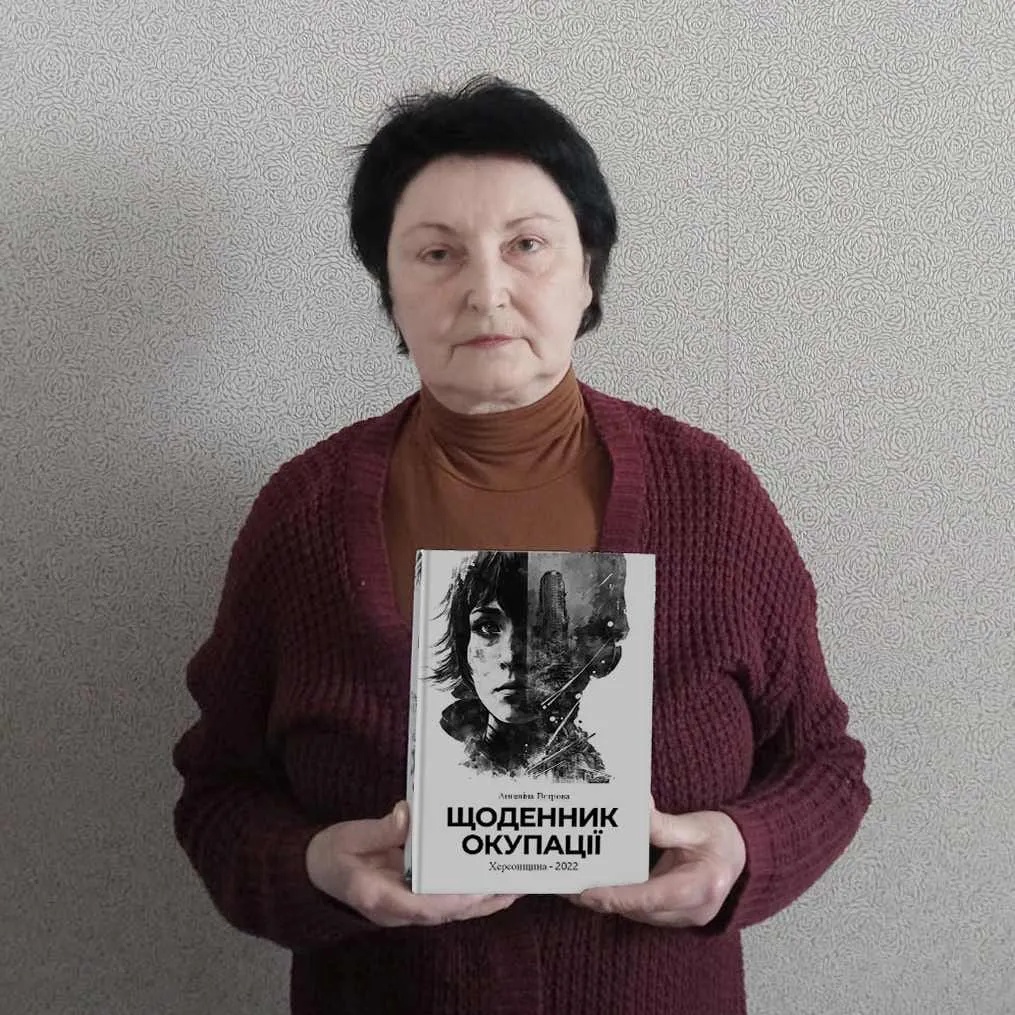
Angelina Vetrova presents the first copy of “Occupation Diary: Kherson Region 2022” to her audience. Source: Angelina Vetrova
“Two hundred sixty – five days of occupation were unbearable – filled with terror, fear, constant challenges. Every night I told my son Yevhen what had happened to me, to our relatives, to friends. We never imagined these messages would one day become a book that travels the world,” – Angelina recalls.
March 2022: A Frost-Laden Nightmare of Fear and Peril
Before the invasion, Angelina worked as a librarian in the district library; her husband, Oleksandr, ran a neighborhood grocery store. Three days before the full – scale assault, she resigned her post and joined him in the family business.
They were unprepared for a major war – no stockpiled medicines, no reinforced cellar. Though news outlets warned of a possible offensive, they believed it would be another provocation. Instead, on February 24th, the first explosions shattered their hopes, and by March the town of Bilozerka was shared with occupying forces.
“I refused to believe a full – scale war had begun until the very end. Locals cleared shelves in shops and pharmacies; supermarkets shuttered their doors. We were lucky to own our store – at least staples were never in short supply. My husband and I kept selling goods at rock – bottom prices, even making home deliveries. Yet every day we feared the occupiers would seize everything,” – Angelina explains.
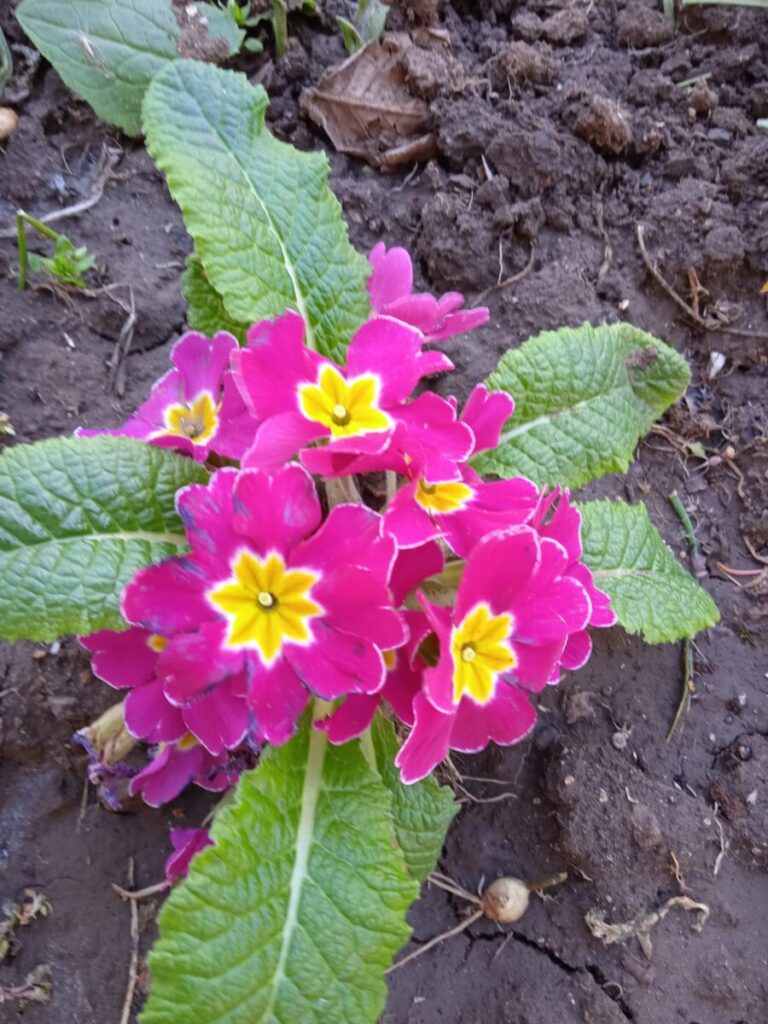
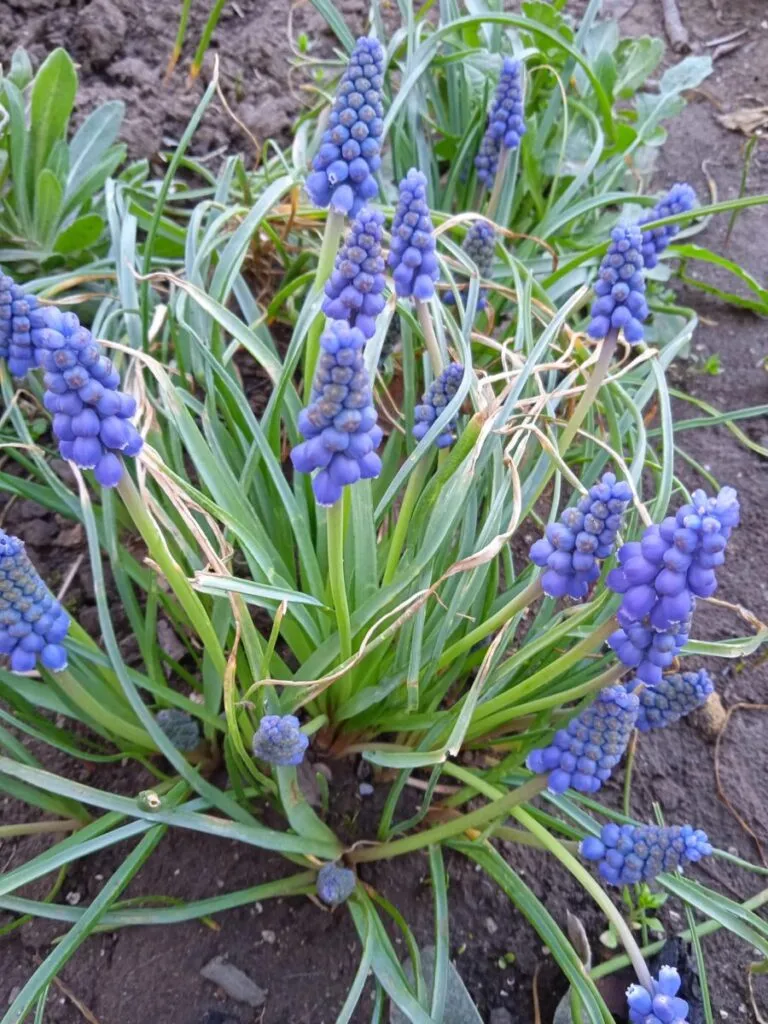
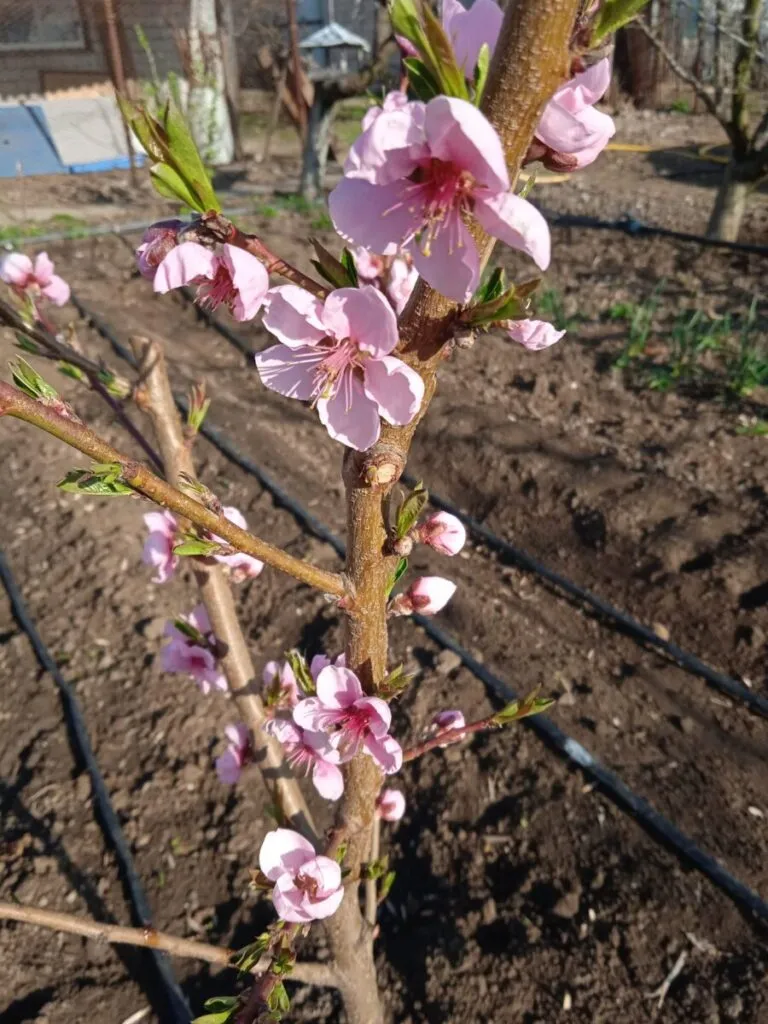
During the occupation, Angelina posted photos of her blooming courtyard on Facebook as proof that she was still alive. Source: Angelina Vetrova
The Vetrovas never planned to flee; they believed the Russians would not linger. In fact, they sheltered friends from nearby Oleksandrivka, where fierce fighting forced villagers to spend weeks in cellars.
“Mom, I Saved It”
Angelina’s greatest support came from their two sons – Yevhen, serving in Ukraine’s armed forces, and Kostyantyn, living in Poland. Each evening, the family connected in a group chat, and whenever signal allowed, they spoke by phone. During those late – night exchanges, Angelina began confiding every fear and experience to her boys. It was then that Yevhen suggested she record everything and send it to him for safekeeping.
May 3, 2022
“Three days ago, on April 30th around 3 p.m., my son called, but I was busy and postponed our chat. By 5 p.m., mobile service vanished. I tried the internet – nothing. The TV went dark. It felt like a trap. It terrified me not knowing anything – an information vacuum. I remembered how during World War II occupiers confiscated radios to break people’s will and push propaganda. And here we are in the 21st century, facing the same tactic?”
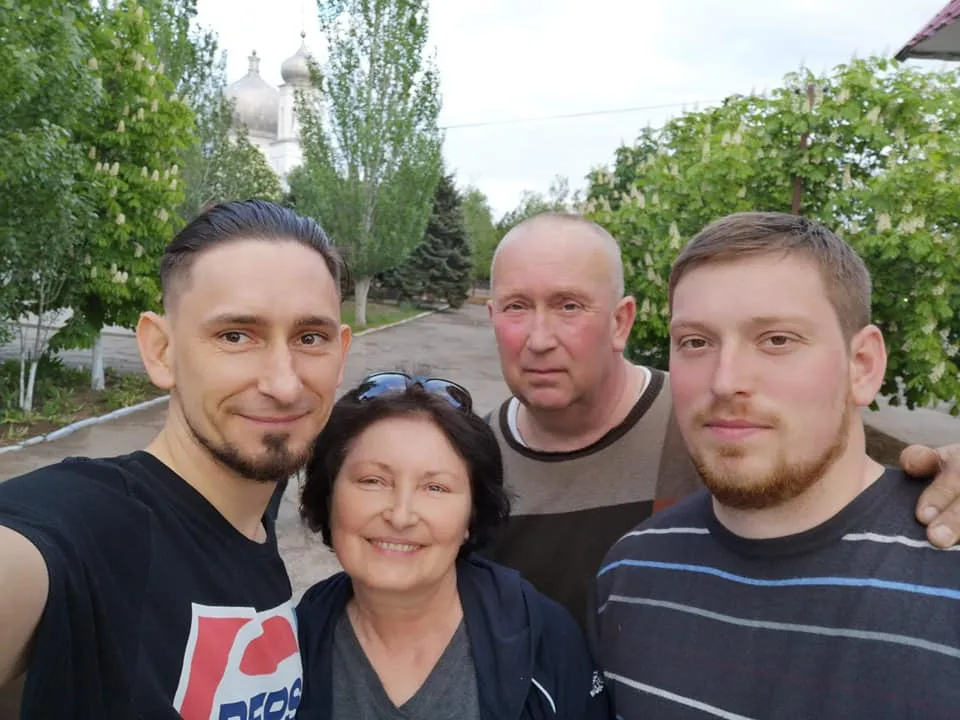
Angelina Vetrova with her sons, Yevhen (left), Kostyantyn (right), and husband Oleksandr. Source: Angelina Vetrova Archive
After days of deliberation, Angelina agreed to Yevhen’s plan. Together they devised a simple protocol: she typed her account, sent it to him, he replied “Saved,” and then she deleted it and went to sleep.
“I wrote and sent notes at night. I was so afraid of falling asleep before deleting them properly. Several times the occupiers knocked on our gate or came inside to search; I’d grab my phone, hands shaking, and frantically erase the messages. Even now, I get goosebumps remembering that fear,” – she says. – “Friends told me the occupiers had equipment that could restore anything ever on your phone. I was so terrified, I stopped writing for days.”
According to Angelina, her entries were often chaotic – raw fragments of anxiety, outrage, pain. Each anecdote begins with a fact and unfolds into her emotional response. She never dreamed these scribbles would find a global readership; she was simply confiding in her beloved sons.
August 11, 2022
“I watched a woman with a bluish face hand out Komsomolskaya Pravda – Russian propaganda newspapers. A collaborator trailed her, snapping photos, no doubt for the Russian media. Some people walked past; many took copies. I wanted to shout, ‘Wake up! Don’t read this hate!’ But I stayed silent – traitors have ears everywhere. If you want to survive, you keep quiet.”
Only after the right bank of Kherson region was liberated in November 2022 did Yevhen reveal he had not only saved every story but also created AI – generated illustrations to accompany them. He proposed launching a social – media project to showcase their work.
“Just a week after our de – occupation, the Russians shelled Bilozerka with cluster munitions, damaging our store. My husband and I were inside with others. That’s when we decided to move to Mykolaiv. It was only then I confessed to my husband that – despite his orders – I had been writing and archiving our occupation stories with our son,” – Angelina remembers.
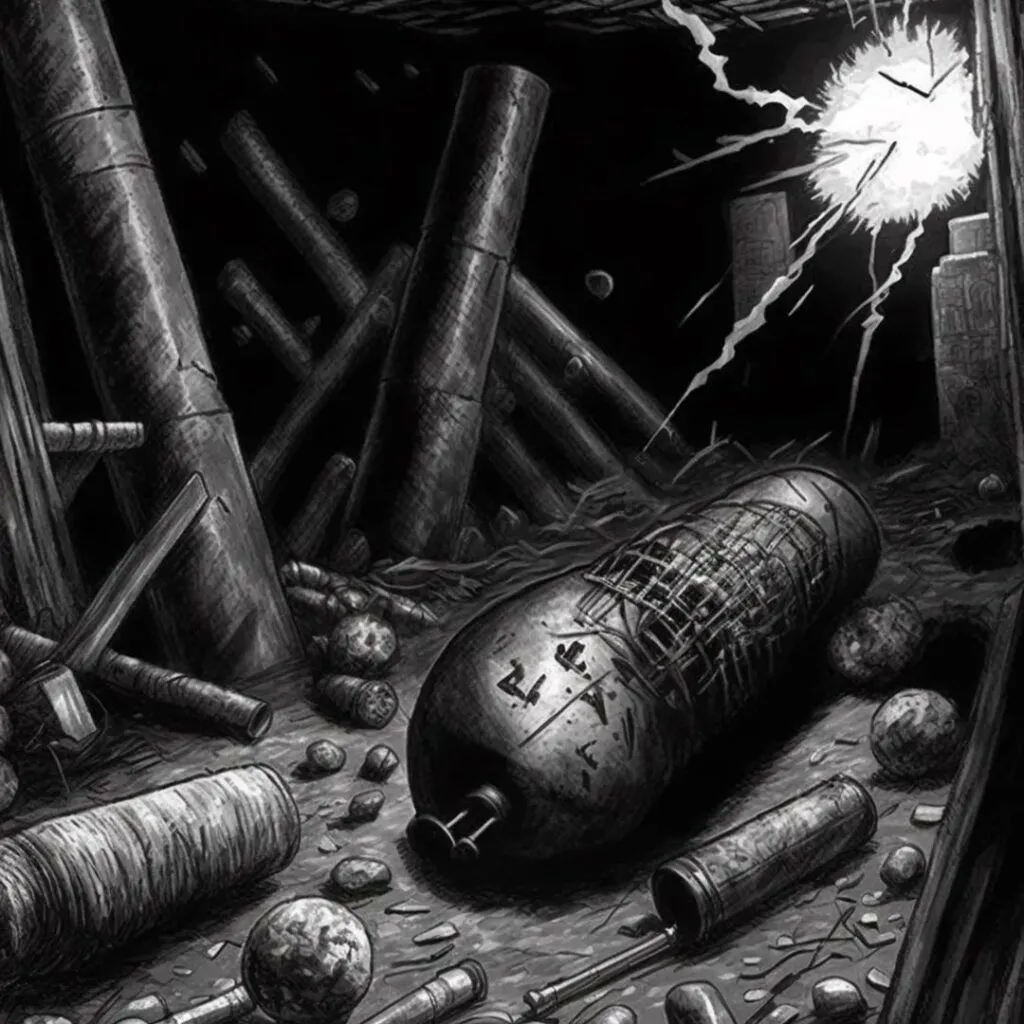
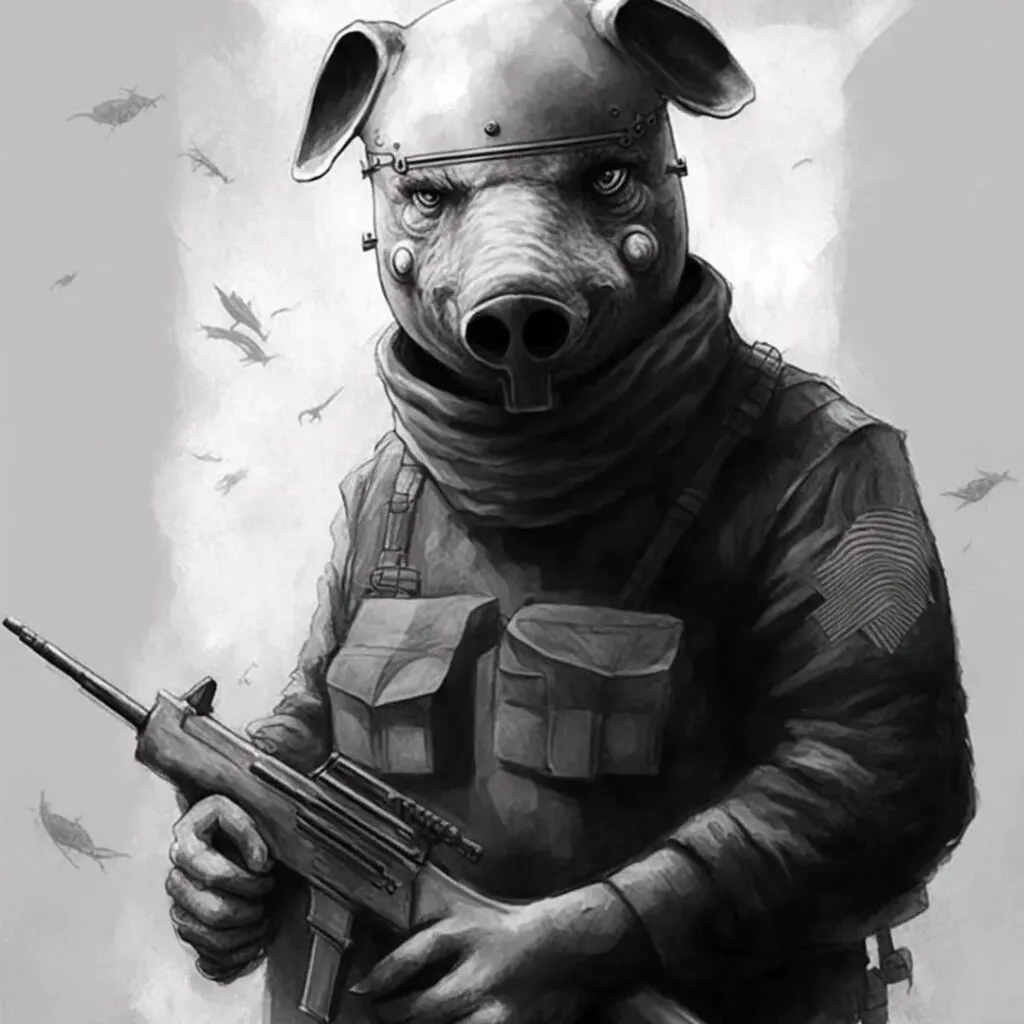
Some of the AI–generated illustrations created by Yevhen Vetrov. Source: Yevhen Vetrov
The Entire Family Rallies In
It wasn’t until December 2023 that Angelina Vetrova first entertained the idea of publishing her stories as a book – “Occupation Diary: Kherson Region 2022“. The real push came from her daughter-in-law, Khrystyna, who argued that a printed volume could help raise funds for Angelina’s son Kostyantyn, now serving on the front lines.
“The mother of one’s son’s wife read my entries and saw the illustrations, and she was blown away,” – Angelina remembers. – “After the latest fundraiser for Kostyantyn’s unit wrapped up, she turned to me and said, ‘Angelina, why don’t you publish your book? We could sell copies and send the proceeds to his battalion.’ My sons, my daughter-in-law, my mother-in-law and my husband all agreed – so we dove right in.”
Every member of the Vetrova clan threw themselves into the project. Khrystyna translated the diary into English; Angelina’s mother-in-law helped with editing; but the driving force was eldest son Yevhen. Beyond creating AI-generated illustrations with Midjourney, he designed the book’s layout and cover and spent months organizing the narratives and images. As a result, he’s credited as the diary’s editor-in-chief.
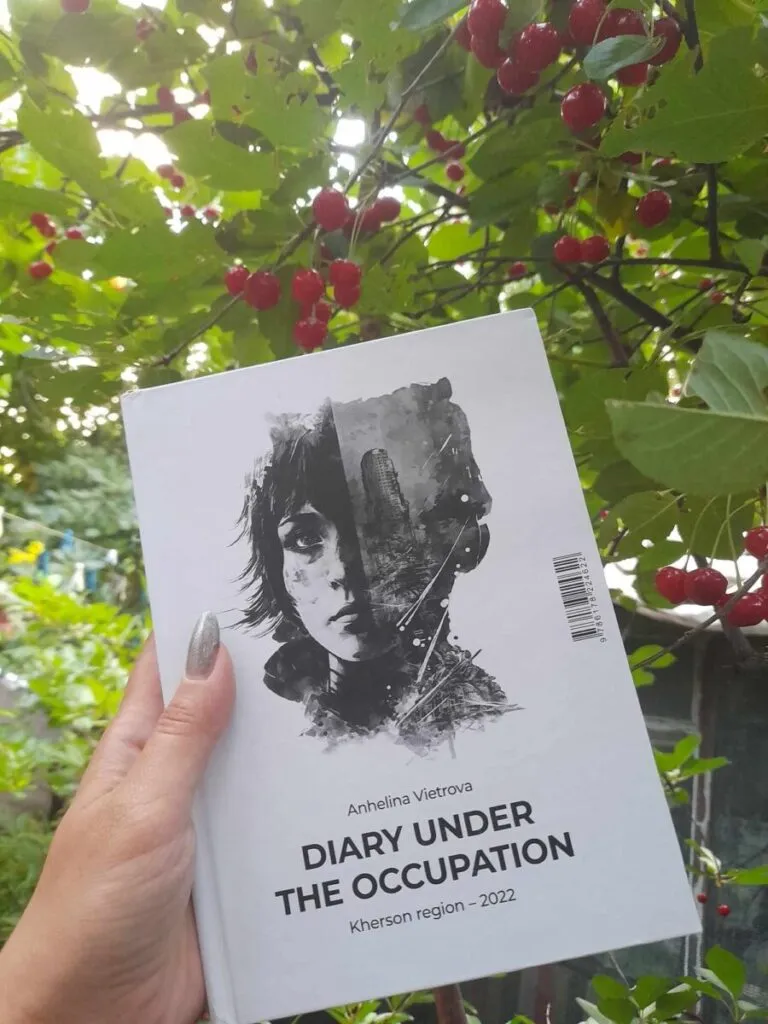
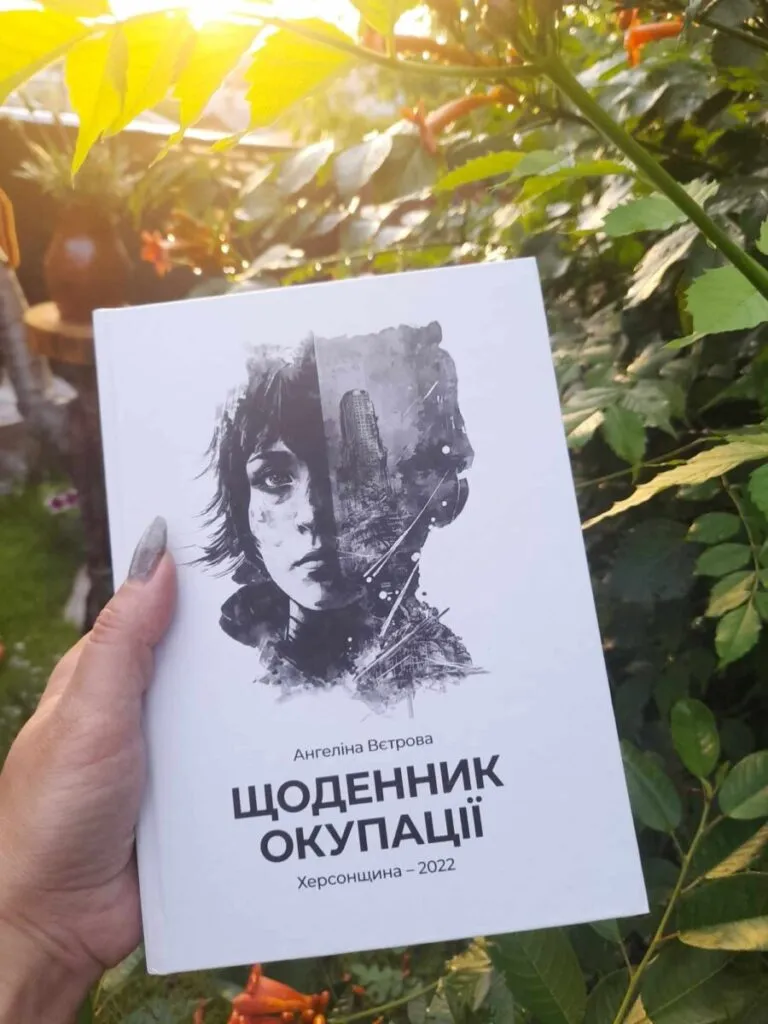
Angelina still recalls the thrill of holding the finished book – bilingual, two languages side by side – for the very first time.
“Honestly, without my family’s encouragement and support, this book would never have existed. My stories would’ve stayed locked in my memory,” – she admits. – “I’m so glad I took that risk, despite my fears and the dangers. Every evening, Yevhen would send me proof pages. I’d read through, suggest tweaks. Only now do I fully grasp that our family’s “Occupation Diary” is a historic record – proof of the war crimes committed against us.”
Though Yevhen has lived in Poland for years and knew the occupation only through news reports and his family’s accounts, he managed to capture every pang of fear and anguish they endured over those eight and a half months in Bilozerka. He credits artificial intelligence for bridging that gap.
“Each image is the AI’s visual interpretation of events through Midjourney’s neural network,” – he explains. – “At times I’d read my mother’s text and feel detached from the emotions. But when I saw the AI illustration, tears streamed down my face. This project became a kind of therapy – it helped me process everything that happened to my family and country, to grieve, to rage, to shed the role of victim. A year ago, I wouldn’t have believed I’d collaborate on such a venture with my mom and an AI. But today, I couldn’t be prouder.”
Yevhen insists it never felt like a burden – no huge investment of time or resources, just a project born from the heart, unfolding exactly as it was meant to.
Read the Diary – Help Ukraine’s Armed Forces
The Vetrovas family has produced “Occupation Diary: Kherson Region 2022”, a 208 – page volume compiling 50 unique stories in both Ukrainian and English. Each page features its own illustration – mostly black – and – white, with just three in full color. Angelina shares one such entry:
“It was summer. I’d scheduled a dentist appointment, but he only worked mornings. That day a downpour flooded the streets, and I approached the clinic under my umbrella when I spotted a car marked with a ‘Z.’ In my head I thought, ‘May all your teeth ache.’ At the door, I saw a Buryat soldier in the corridor. As I folded my umbrella, he rose from his chair to reload his rifle. My body shook with fear at that movement. I walked past him, heart pounding. I will never forget that terror.”
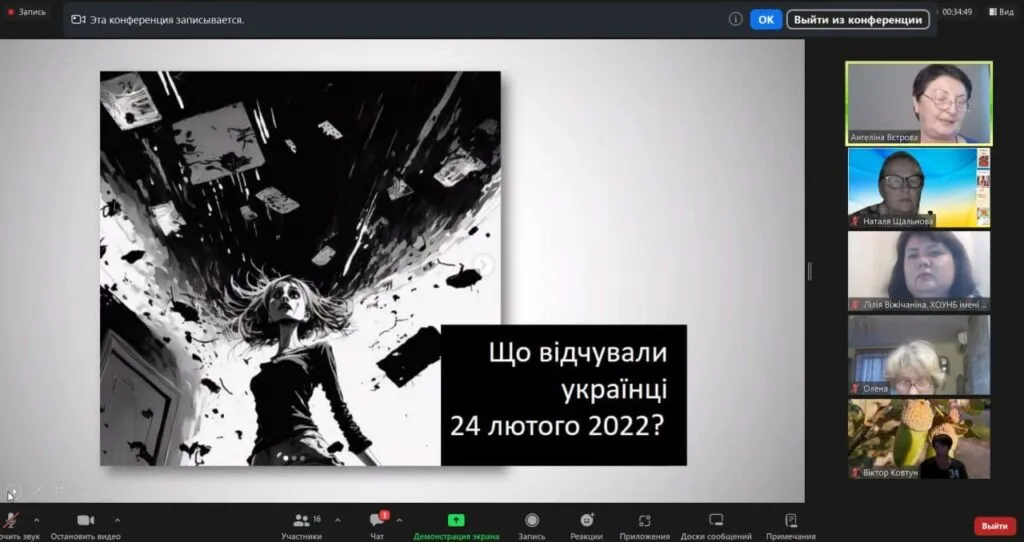
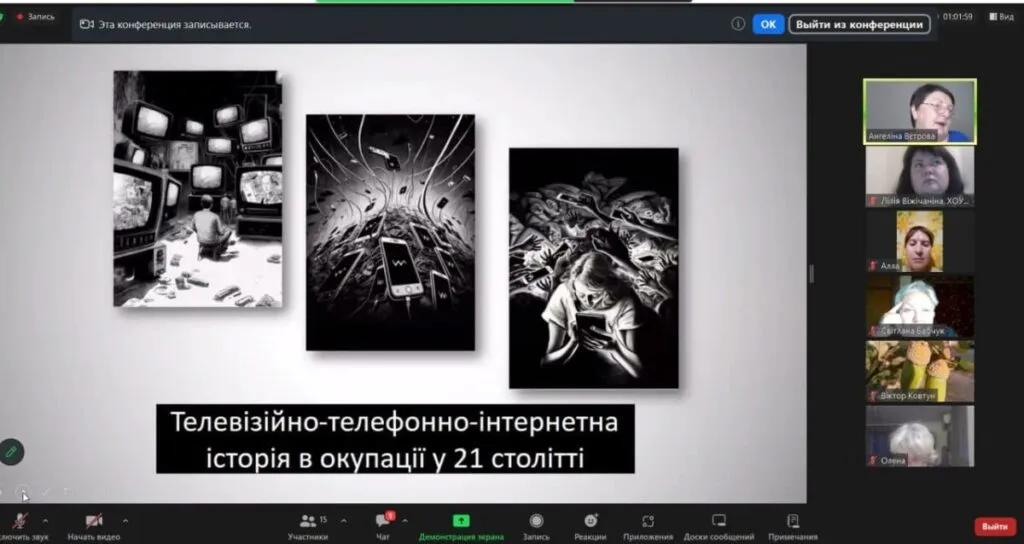
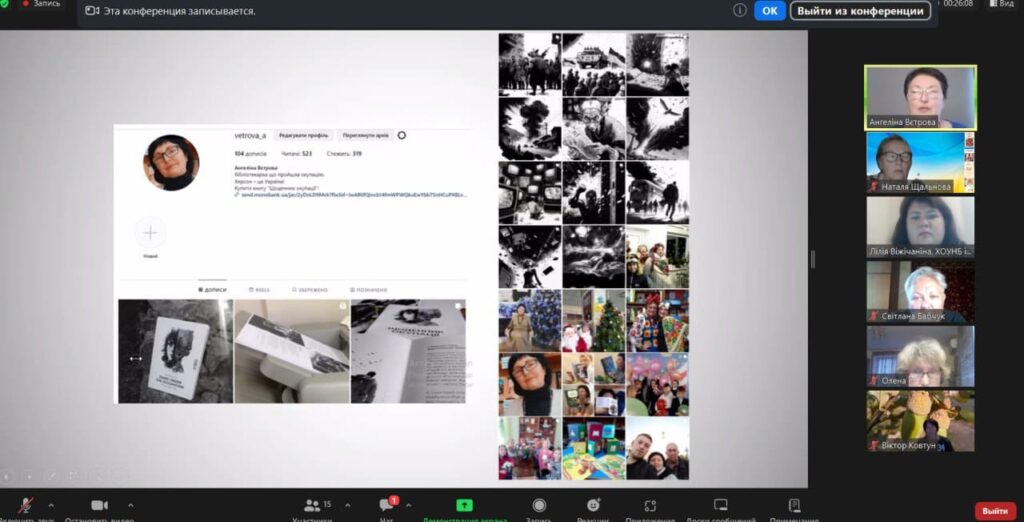
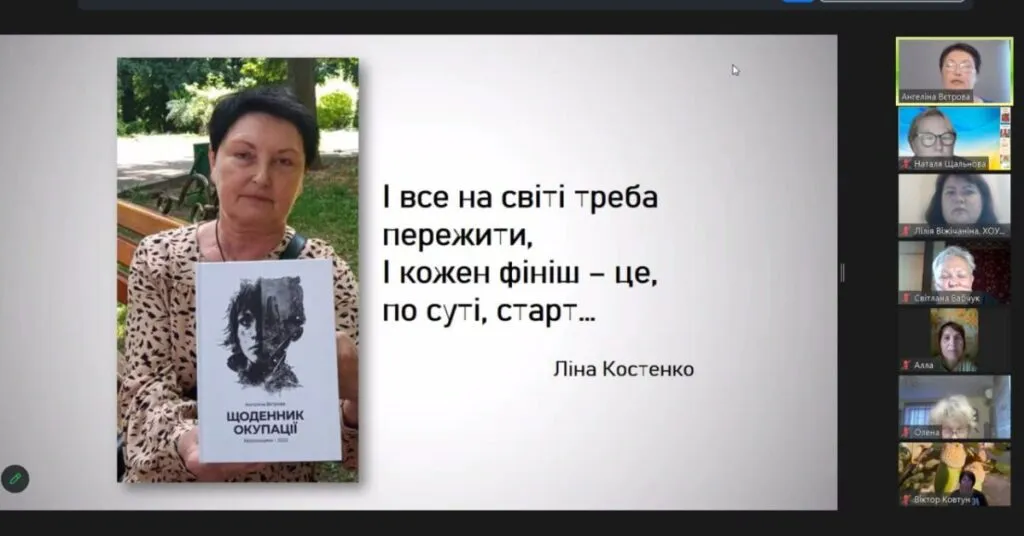
Angelina Vetrova has held several presentations of “Occupation Diary: Kherson Region 2022” for fellow residents and visitors of neighboring towns. Source: Librarian Liliya Vizhichanina
Angelina printed just 250 copies of Occupation Diary: Kherson Region 2022. She donates them to libraries and sells them to anyone who wants a copy, with all proceeds going into a charity fund to equip the unit where her son Kostyantyn serves.
“We know soldiers receive uniforms, gear, and supplies, yet shortages persist. We’ve often dipped into our own savings to buy helmets and bulletproof vests – tens of thousands of hryvnias. So we decided every penny raised should go straight to our defenders,” – Angelina explains.
American Recognition
After Angelina’s social-media project on occupation stories launched, a translator from The New York Times reached out, saying journalist James Verini wanted an exclusive family interview.
“We were nervous – none of us speaks English, and he didn’t speak Ukrainian or Russian. But we agreed because the world needed the truth. Later, James told us our story was just one segment of a larger article on Bilozerka’s occupation. He’d come to Ukraine specifically to hear these stories firsthand, feel the emotions and convey them accurately. We were amazed. The article ran in The New York Times, and in my book there’s a QR code linking to the English version,” – Angelina recalls.
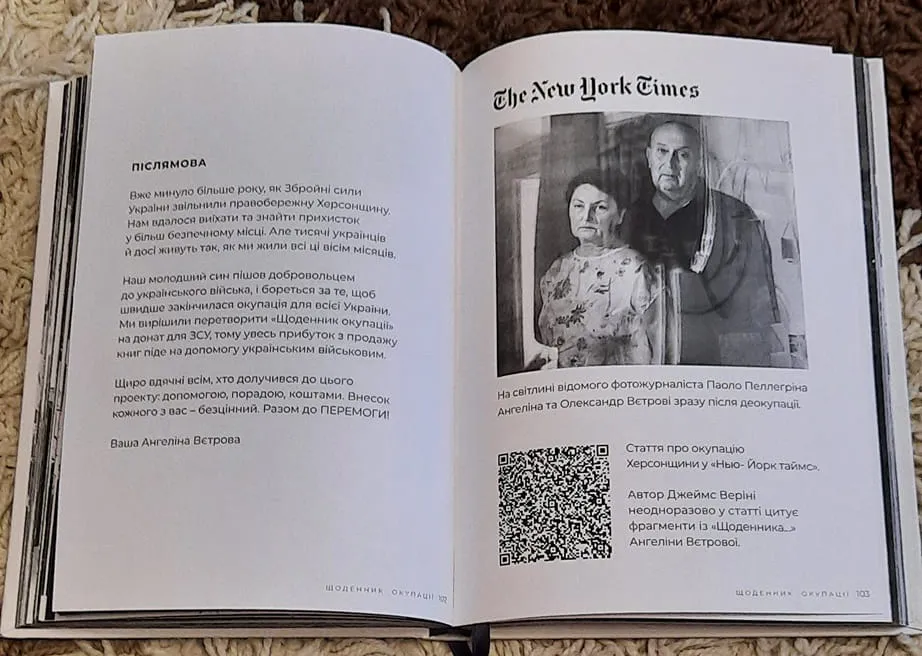
One page of the diary is devoted to the interview with the American journalist, complete with the QR code for readers to access the article. Source: Angelina Vetrova
Encouraged by that exposure, Angelina decided to make the entire book bilingual. American volunteers polished the English translations, ensuring they conveyed not just facts but emotion. It was the right choice – soon after printing, international readers were eager to buy “Occupation Diary: Kherson Region 2022”.
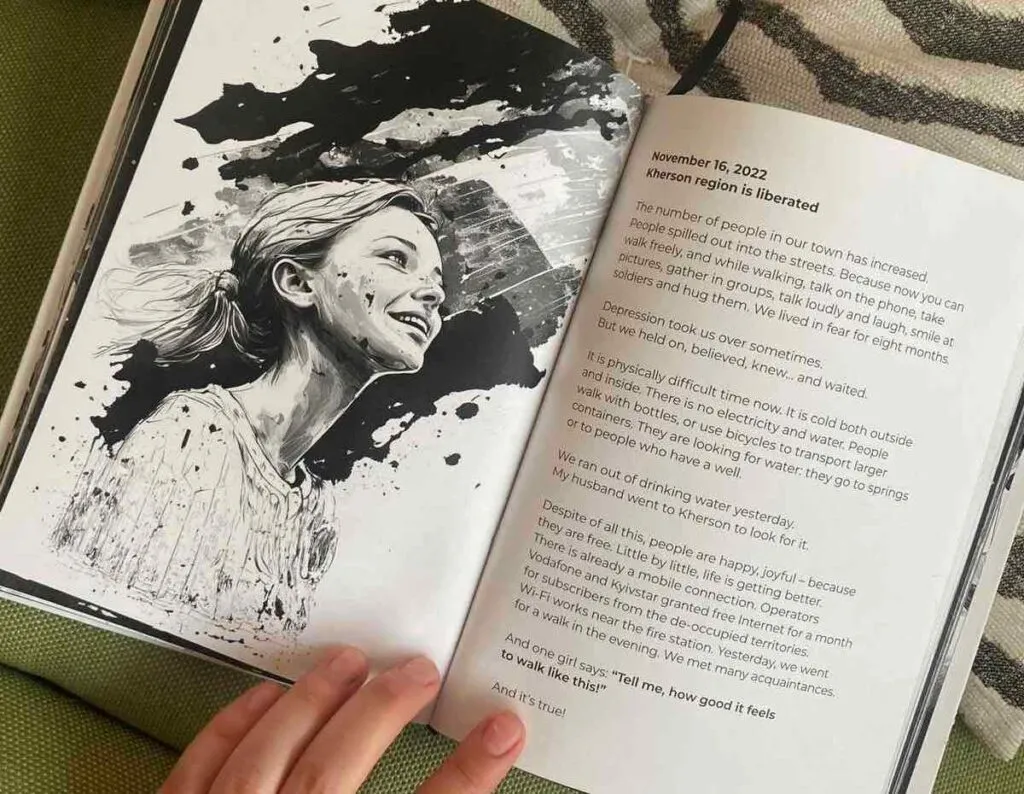
A team of volunteers refined the English translation. For Angelina, it was essential that the text feel authentic, not mechanical. Source: Angelina Vetrova
Impossible to Read Without Tears
“An incredible book,” “Your spirit inspires me,” “Such powerful stories” – these are just a few of the hundreds of messages Angelina has received from readers. Both friends and strangers have purchased copies.
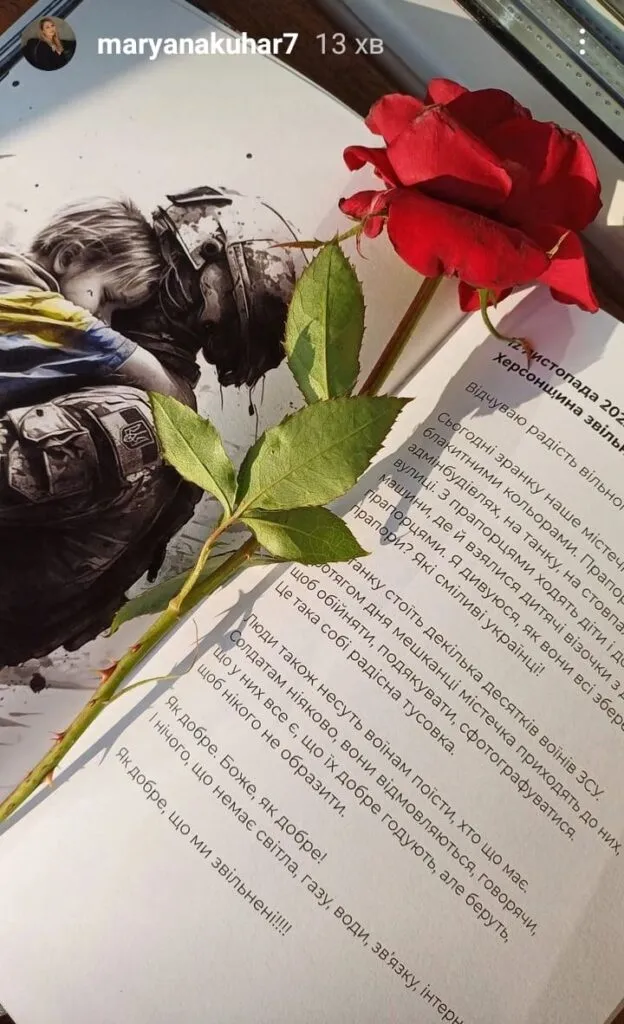
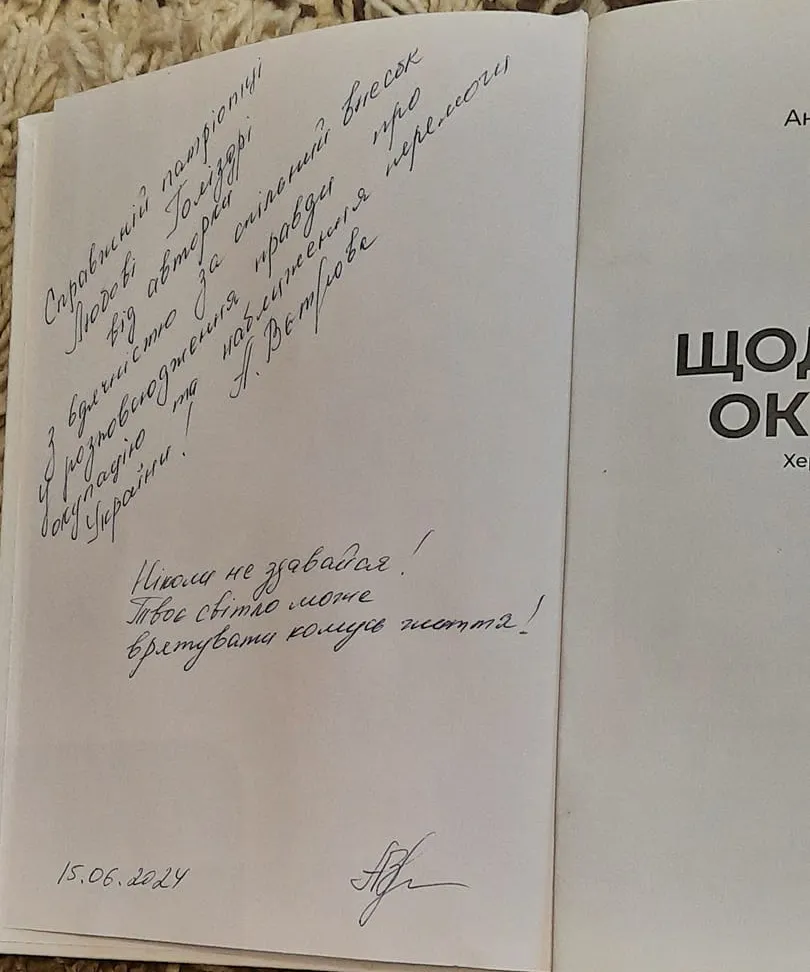
Readers regularly share photos and reviews of the diary on social media, bringing joy to Angelina. Source: Reader archives
Among them is Lyubov Holizdra, originally from Zaporizhzhia region and now living in Italy. She thanks Angelina for her courage, noting that few would revisit such horrors. Lyubov believes “Occupation Diary” must be preserved for future generations, so they understand the threat posed by a treacherous neighbor.
“Reading this book, you feel the terror and paralyzing uncertainty people endured under occupation,” – Lyubov writes. – “Yet even then, they supported one another however they could. ‘I felt like a spring wound to its limit in occupied territory’ – those words clutch at the heart. How many more springs like that still teeter on the brink? Thank you, Angelina, for this priceless historical record and for sharing your emotions with us. Stay strong, Angelina and Oleksandr. Let us hold fast, dear Ukrainians. Slava Ukraini!”
Equally moved is Kherson native Galina Abramova, who has followed the Occupation Diary project since its first mention online. She admires how every family member contributed and how creatively the project has grown, bringing wider awareness of Kherson region’s suffering and resilience.
“Reading this book felt like a therapy session,” – Galina reflects. – “I know of a therapeutic technique where retelling trauma helps one process and release it. That’s what happened as I read “Occupation Diary” – tears first, then relief. I urge everyone to read it, to better understand those who lived – and still live – through occupation. And remember: by purchasing a copy, you’re helping our Armed Forces.”
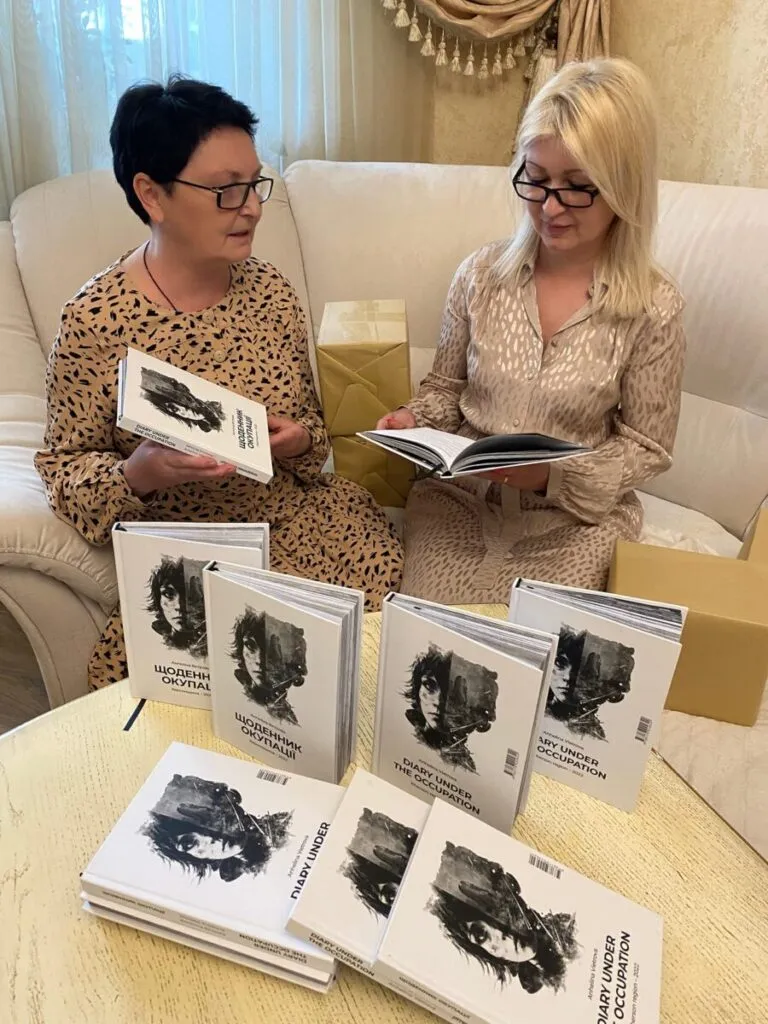
Angelina Vetrova and Galina Abramova examine the first printed copies together. Source: Galina Abramova
Angelina now offers the diary in two formats: electronic (150 UAH) and print (400 UAH). To get a copy, donors simply contribute to her charity fund, then send her the donation receipt and shipping details via messenger.
She believes that, together, they will raise enough to buy equipment that will help Ukraine’s defenders reclaim their land. And the Vetrova family dreams of returning home to Bilozerka, resuming their business, and once again welcoming friends and loved ones under their own roof.
Author: Iryna Miezientseva