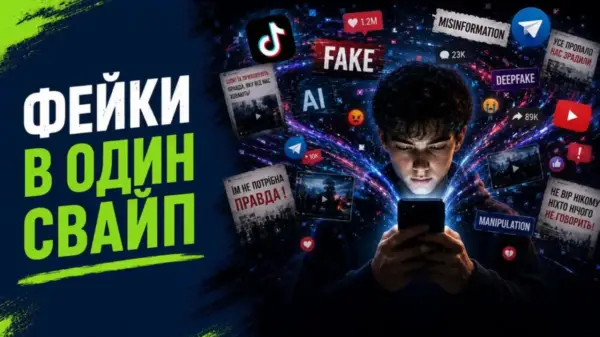
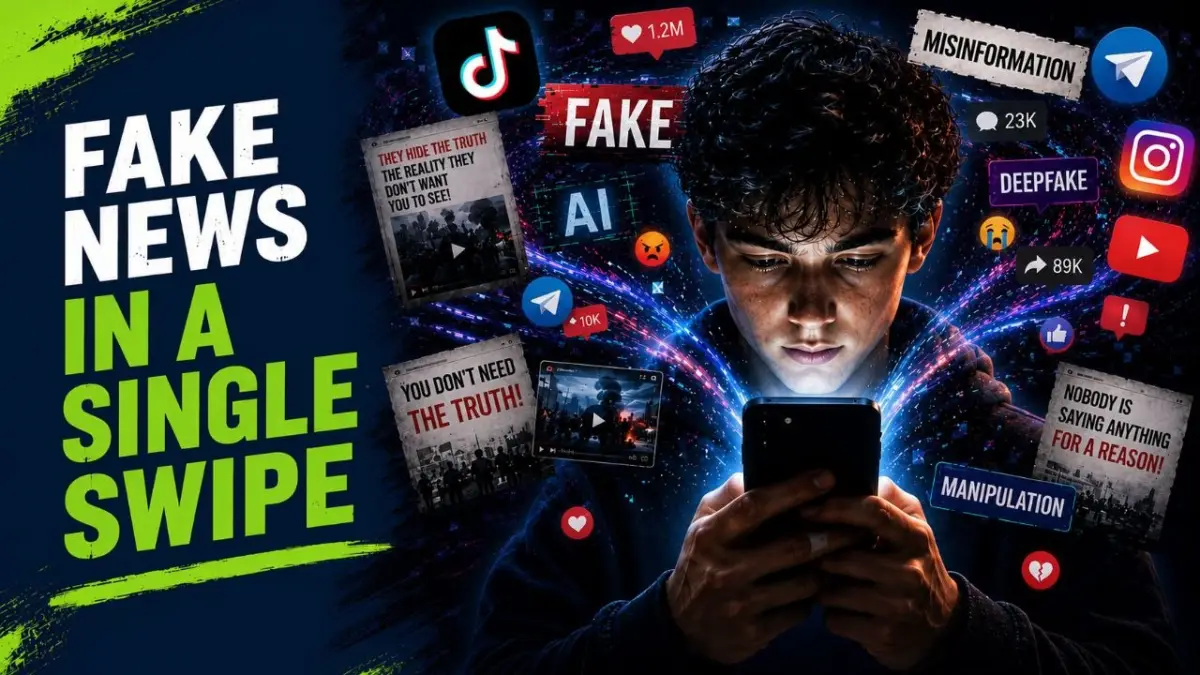
TikTok, Telegram, Instagram, and YouTube have become the primary sources of information for today’s younger generation. Alongside news and entertainment, these platforms also spread misinformation, manipulation, and propaganda. How does modern disinformation work? Why are young people its primary target? And what does this mean for Ukrainian society during wartime?
A New Frontline of War Is Inside Your Smartphone
For most young Ukrainians, the day no longer begins with television news or the homepage of a news website. Instead, they open TikTok, Threads, Telegram, Instagram, or YouTube. Increasingly, these platforms are where perceptions of events in Ukraine and around the world are formed.
Over the past few years, social media has firmly established itself as one of the leading sources of news for younger audiences. According to the Reuters Institute’s Digital News Report 2025, younger generations are increasingly relying on social platforms for news, while the audience for traditional media continues to decline. Ukrainian studies point to the same trend: young people are far more likely to consume news through short-form videos, Telegram posts, or recommendations from influencers than through conventional news websites.
Experts emphasize, however, that social media itself is not the problem. The real issue lies in how these platforms are designed. Their algorithms are built to keep users engaged for as long as possible, prioritizing content that sparks strong emotional reactions—surprise, fear, outrage, or excitement. As a result, false or misleading information often spreads faster than journalists and fact-checkers can verify it.
Russia’s information campaign against Ukraine did not begin with the full-scale invasion in 2022. As Kateryna Odarchenko, Chair of the Institute for Democracy and Development PolitA, has noted, the Kremlin spent years cultivating a favorable information environment in Crimea and Donbas long before open military aggression began. Through controlled media, political influence, and the systematic promotion of propaganda narratives, Russia sought to reshape public opinion, undermine trust in Ukrainian institutions, and create an alternative version of reality.
Today, information security depends not only on governments or professional media organizations but also on how every individual consumes, evaluates, and shares information. This is especially true for young people, whose daily lives are deeply intertwined with the digital world.
Why Young People Are Especially Vulnerable
Young people increasingly receive information through short videos, stories, or social media posts that can be consumed within seconds. This format makes it possible to absorb a large amount of information quickly but leaves little time to verify facts or evaluate sources. Eye-catching visuals, dynamic editing, and confident presentation often create the impression of credibility even when the information is incomplete or misleading.
Social media algorithms play a crucial role in this process. Their primary goal is to maximize user engagement by recommending content similar to what has already attracted attention. When users repeatedly interact with emotionally charged or controversial posts, algorithms gradually create personalized information environments where similar content dominates. These so-called echo chambers expose users to the same viewpoints repeatedly while limiting their exposure to alternative perspectives.
Disinformation campaigns have adapted to this reality. Whereas misinformation was once associated mainly with fake news websites or television propaganda, today it is increasingly disguised as ordinary TikTok videos, Instagram Reels, or YouTube Shorts. These clips may last only a few seconds, yet that is often enough to create a lasting emotional impression. By contrast, checking the original source, finding the original publication, or reviewing the full context requires considerably more effort—something many users simply do not do.
Recognizing these challenges, Ukrainian institutions have also adapted their communication strategies. The Center for Countering Disinformation under Ukraine’s National Security and Defense Council now maintains an official TikTok account, where it explains how information manipulation works, debunks popular falsehoods, and teaches audiences how to verify information. This demonstrates that combating disinformation today no longer happens only through official statements or analytical reports but also directly on the platforms where young audiences spend most of their time.
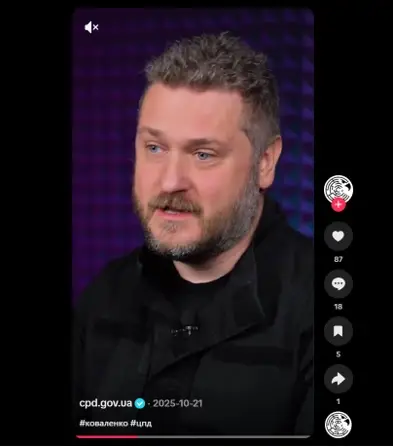
TikTok Account of Ukraine’s Center for Countering Disinformation
Another major factor is the growing influence of bloggers and social media influencers. For many young people, they have become not only creators of entertainment but also trusted sources of news, political commentary, and explanations of current events. Unlike professional journalists, most influencers are not required to follow editorial standards or verify information before publishing it. As a result, the high level of trust placed in favorite bloggers often leads audiences to accept their claims without critical evaluation.
Research conducted by Ukraine’s Institute of Mass Information highlights another important challenge—the illusion of competence. Young users are highly familiar with social media platforms and digital technologies, making many of them believe they can easily recognize false information. Yet this confidence does not necessarily translate into the habit of checking original sources, evaluating authors, or seeking confirmation from independent media. Simply understanding that algorithms and disinformation exist does not automatically make people resistant to manipulation.
A striking example emerged after the destruction of the Kakhovka Dam in June 2023. Shortly after the disaster, Telegram channels and social media platforms were flooded with outdated videos falsely presented as footage of the explosion, alongside contradictory explanations of what had happened. Some posts claimed the explosion had never occurred, while others blamed Ukraine or argued that the collapse resulted from the dam’s “natural deterioration.” Fact-checkers later demonstrated that one of the viral videos had actually been recorded in the autumn of 2022 rather than on the day of the disaster, while several contradictory narratives were deliberately launched simultaneously, creating information chaos. For users relying primarily on Telegram channels or short-form videos, distinguishing verified information from manipulation became especially difficult.
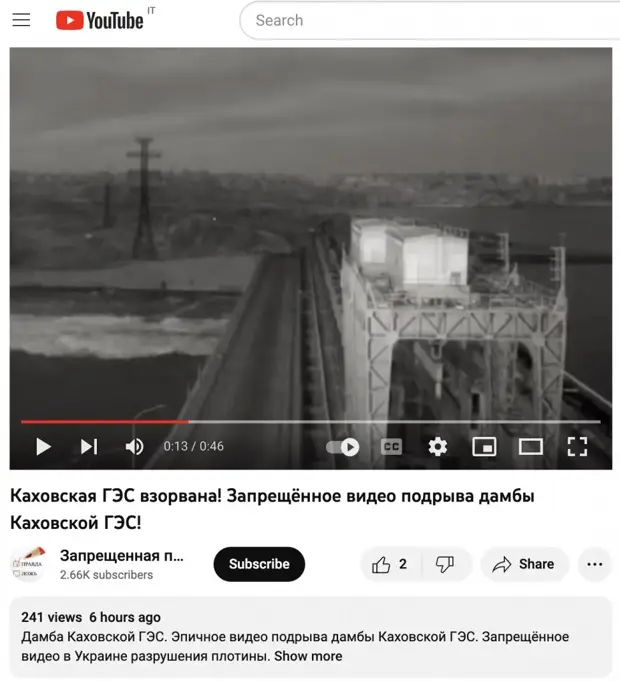
Source: https://www.stopfake.org/en/fake-kakhovka-dam-explosion-captured-on-video/
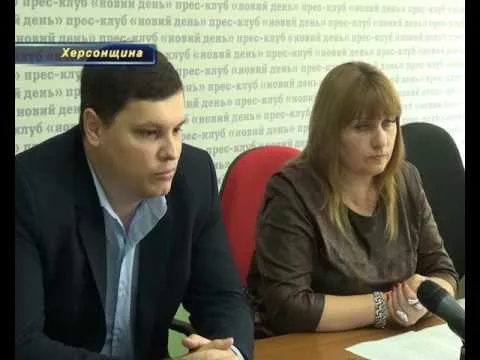
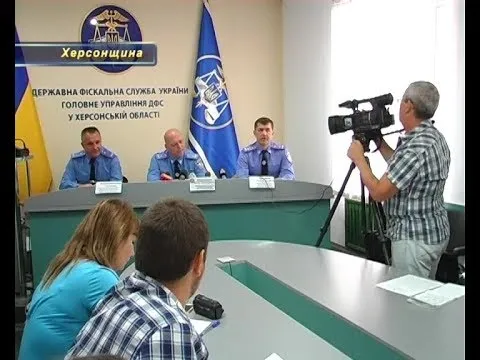
For Ukraine, these risks are particularly significant. During the full-scale war, disinformation has been used not only to spread false narratives but also to fuel panic, undermine trust in public institutions, and weaken public morale. This has been especially evident in occupied territories and frontline regions, where the information space has become as contested as the battlefield itself. One of the clearest examples is the Kherson region, where Russian propaganda systematically combined military control with information warfare.
How Disinformation Has Changed in 2025–2026
Modern disinformation no longer resembles the crude fake stories that once dominated the internet. A few years ago, misleading content was often easy to recognize through sensational headlines or dubious websites. Today, manipulation has become far more sophisticated. Rather than fabricating entirely false stories, propagandists increasingly rely on authentic photographs, videos, or quotations presented without context, accompanied by misleading explanations or emotionally charged interpretations.
The rapid development of artificial intelligence has introduced another layer of complexity. Generative AI tools can now produce highly realistic images, synthetic voices, and convincing videos that are difficult to distinguish from authentic ones.
Experts emphasize, however, that even without artificial intelligence, manipulation can be extremely effective. Sometimes all it takes is changing a headline, trimming a video, or removing several sentences from a public speech. As a result, a genuine fact receives an entirely different interpretation, while users who see only a short fragment mistake it for the complete picture.
According to Kateryna Odarchenko, today’s information war is fought not only over facts but also over trust. Information operations increasingly seek not to persuade audiences to believe one specific version of events but to create doubt, foster confusion, and convince people that objective truth is impossible to establish. In such an environment, trust in journalists, public institutions, and even clear evidence gradually erodes.
Under these conditions, combating disinformation is no longer limited to debunking individual falsehoods. It increasingly depends on strengthening critical thinking, media literacy, and the ability to evaluate information sources. In today’s digital environment, manipulation often lies not in the facts themselves but in the way they are presented, the emotional framing they receive, or the context that is deliberately omitted. Internet memes can play a similar role by using humor and irony to normalize propaganda narratives and gradually shape public perceptions.
The Emotions Disinformation Is Designed to Exploit
The primary goal of modern disinformation is not necessarily to convince people to believe a specific falsehood but rather to provoke a strong emotional response. Fear, anger, outrage, and anxiety spread far more rapidly than verified facts, while social media algorithms amplify this effect by promoting highly engaging content.
This is why information campaigns are increasingly built not around a single major fake story but around dozens of messages designed to undermine trust in governments, independent media, and international partners. One of the most persistent narratives claims that “everyone is hiding the truth.” Alongside it, audiences are regularly exposed to messages suggesting that the West is abandoning Ukraine, that Ukraine’s defeat is inevitable, or that the country is under “external control.” Although these narratives differ in content, they pursue the same objective: weakening public resilience by convincing people that reliable information no longer exists.
These campaigns become especially influential during periods of crisis—large-scale missile attacks, technological disasters, or other emergencies—when the demand for immediate information is particularly high. Russia has applied this strategy in the temporarily occupied territories of Ukraine, where information control became an integral part of its military strategy. One of the clearest examples is the Kherson region.
Kherson: When Information Became Another Weapon
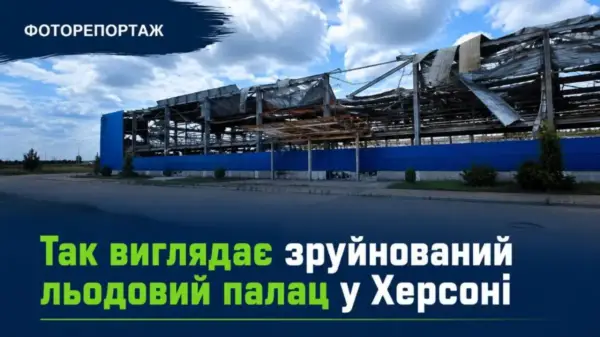
Kherson was one of the first Ukrainian regions where Russia sought to establish control not only over territory but also over the information environment. After occupying part of the region in the spring of 2022, local television and radio stations were shut down or replaced with Russian broadcasts. Ukrainian media outlets ceased operating, and residents increasingly relied on Telegram channels, social media platforms, and Russian information resources for news. Under these circumstances, information itself became another instrument of control.
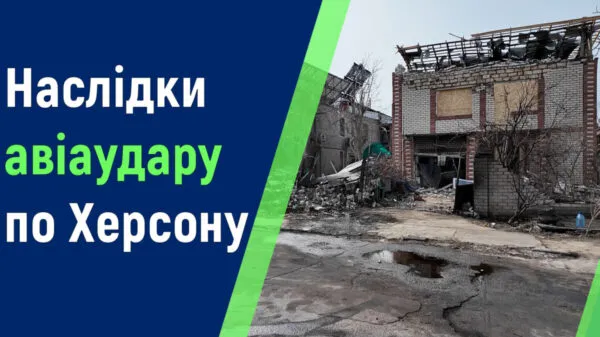
However, information pressure did not end after Kherson was liberated. Instead, Russian information operations changed their form. Rather than exercising complete control over the local media landscape, they increasingly relied on digital platforms to spread narratives portraying Kherson as an “abandoned city,” claiming there was “no assistance,” warning of an “inevitable renewed offensive,” or insisting that rebuilding the region was pointless. These messages targeted not only residents of Kherson but also the broader Ukrainian public, fostering feelings of hopelessness and constant insecurity.
At the same time, the experience of the region demonstrates another important trend. Despite attempts to isolate the local information space, residents actively searched for alternative sources of information. They relied on Ukrainian online media, VPN services, independent Telegram channels, and recommendations from fact-checking organizations. This once again demonstrates that information resilience depends not only on government institutions but also on citizens’ ability to critically evaluate information and verify it through multiple independent sources.
Today, media literacy is no longer simply an educational priority—it has become a matter of national security. In a world where information itself can be used as a weapon, the ability to question an emotional headline, verify a source, and confirm facts has become just as important as digital literacy itself.
Building Information Resilience
Completely avoiding disinformation is impossible. But people can learn not to become its unintended distributors. Verifying sources, resisting emotionally charged headlines, and comparing information across multiple independent outlets are simple habits that significantly reduce the impact of manipulation.
For Ukraine, however, this issue extends far beyond personal digital hygiene. During wartime, information has become another battlefield, and every social media user is, knowingly or not, a participant in it. A single careless repost can amplify panic, while taking one extra minute to verify information can help prevent the spread of disinformation.
Social media is unlikely to lose its position as the primary news source for younger generations. The real solution, therefore, is not abandoning digital platforms but strengthening critical thinking. In today’s information war, victory belongs not to those who speak the loudest, but to those who can distinguish facts from manipulation.
Valentyna Kosiuk
This article was produced as part of the project “Youth Voices Against Disinformation and Propaganda: Developing the Youth Media of the Future,” funded by the Swedish Institute and implemented by Internews Ukraine, Fanzingo (Sweden), and the Independent Journalism Center (Moldova).