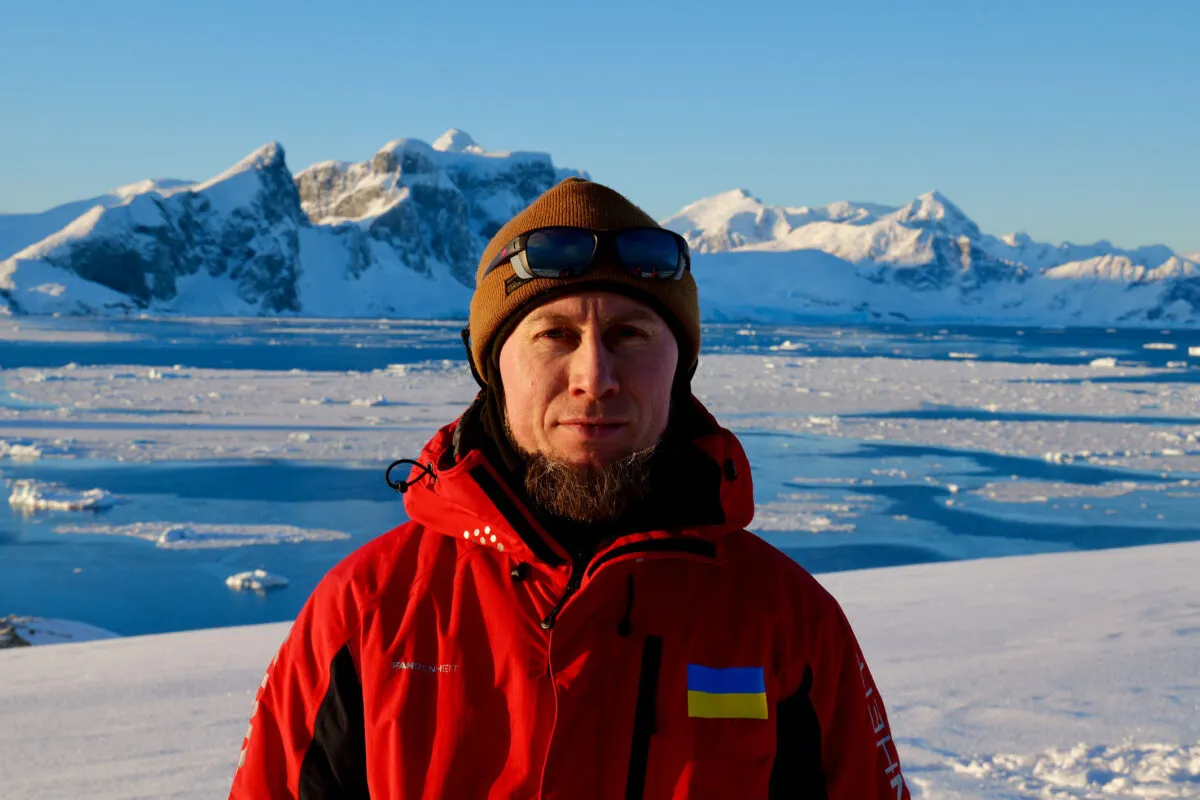
In the frozen desert of ice and snow, more than six months have passed with the sole representative of Kherson region in the 29th Ukrainian Antarctic Expedition: Sergey Yakushchenko. Alongside fellow scientists, he has for the first time joined the team that lives and works for a year at the Akademik Vernadsky station on the Antarctic Peninsula. For Mr Yakushchenko, this journey to the southern continent is not only a chance to contribute to vital scientific research, but also the fulfilment of a long-cherished dream.
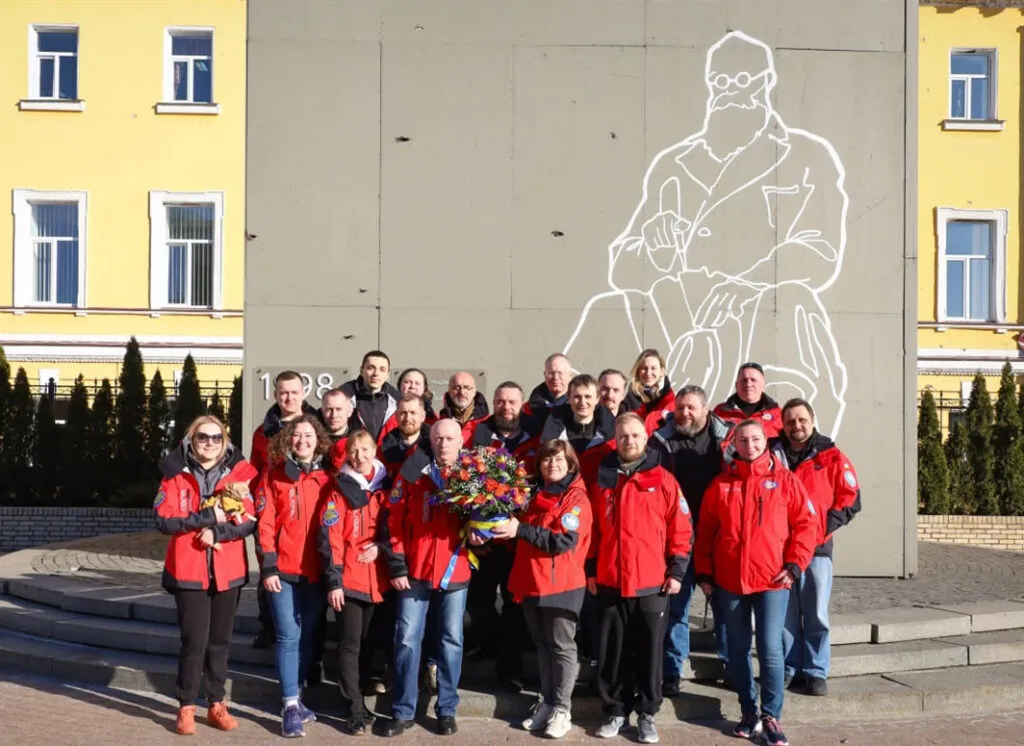
The team of the 29th Ukrainian Antarctic Expedition, of which Sergey Yakushchenko is a member. Source: National Antarctic Scientific Center
Every day, Sergey conducts between five and sixty measurements of total ozone content in his role as the station’s ozone-monitoring specialist, focusing on the “ozone hole.” Despite his intense schedule, he has made time to share his research findings, impressions of life on the ice, and anecdotes about co-existing with penguins.
Seven Years in the Making
Sergey Yakushchenko was born and raised in Voskresenka, a village in Kherson region, spending his childhood among wheat fields and melon farms. Even then, he dreamed of travel.
“I’ve always loved our Kherson land – its nature, its beauty – but I yearned to discover new horizons. I remember how extraordinary it felt when, once a year, my family managed to venture beyond our village borders. At home, I would pore over books and imagine journeys. And that desire only grew stronger with time,” – he recalls.
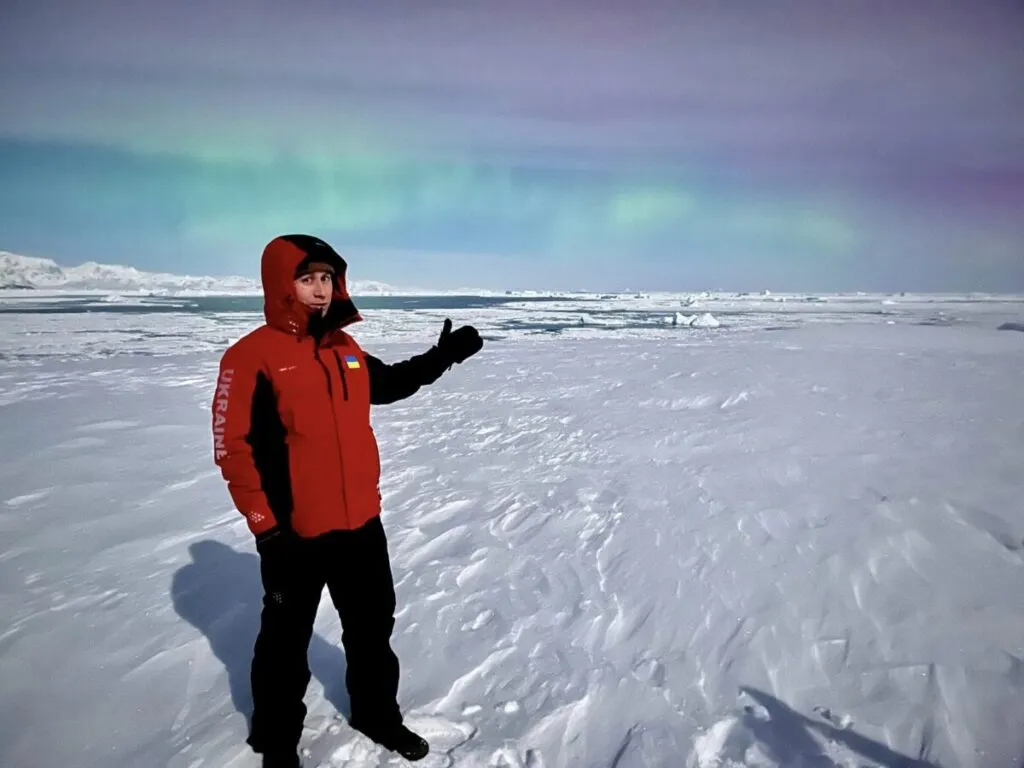
A Kherson native who believes one should always follow their dreams, regardless of age. Source: Sergey Yakushchenko.
By 2014, Sergey had graduated from Kherson State University with a degree in Physics, specialising as a physics teacher and astronomy instructor. He then joined Kherson State Maritime Academy, where he earned a second higher-education diploma in Navigation and Ship Management, completed postgraduate studies, obtained a PhD, and became a lecturer. Since 2020, he has led the Academy’s Scientific Society for students, postgraduates and early-career researchers.
“My dream of working at the Ukrainian Antarctic station took shape about five years ago. As a postgraduate, I saw an announcement on social media: the National Antarctic Scientific Center was holding an open competition for expedition members. It gave me hope – anyone could apply. I researched what specialisms were needed at the station and identified areas where I needed to improve. For five years, I honed my skills, gained experience and only then felt ready to submit my application,” – he explains.
Trials, Tribulations and Triumph
Sergey planned his first application in 2021, but work commitments forced him to postpone. Then came the full-scale invasion, the occupation of Kherson and his evacuation to Korosten in Zhytomyr region. At that time, his priorities lay with rescuing his family, not polar science. Once he had established remote working arrangements and settled in his new home, he resolved to chase his dream. In summer 2023, he finally applied.
“I didn’t expect to be selected on my first attempt. My goal was simply to reach the second stage of the competition – an interview with the panel and a psychologist. I wanted to understand the selection criteria, discover my shortcomings and learn what skills I still needed. I was thrilled when the email arrived inviting me for an interview,” – he says.
After passing interviews, medical examinations and a two-week training course in Kyiv – where participants worked on team-building, refined practical skills and learned about life at Vernadsky station – Sergey was among the candidates chosen for the main team.
“At the third stage, they prepare two teams: the primary and the reserve. Both undergo the same psychological training, briefings and medical checks as insurance in case someone cannot go. Joint training is vital, too, since you must not only perform your own duties but also understand your colleagues’ roles,” – he adds.
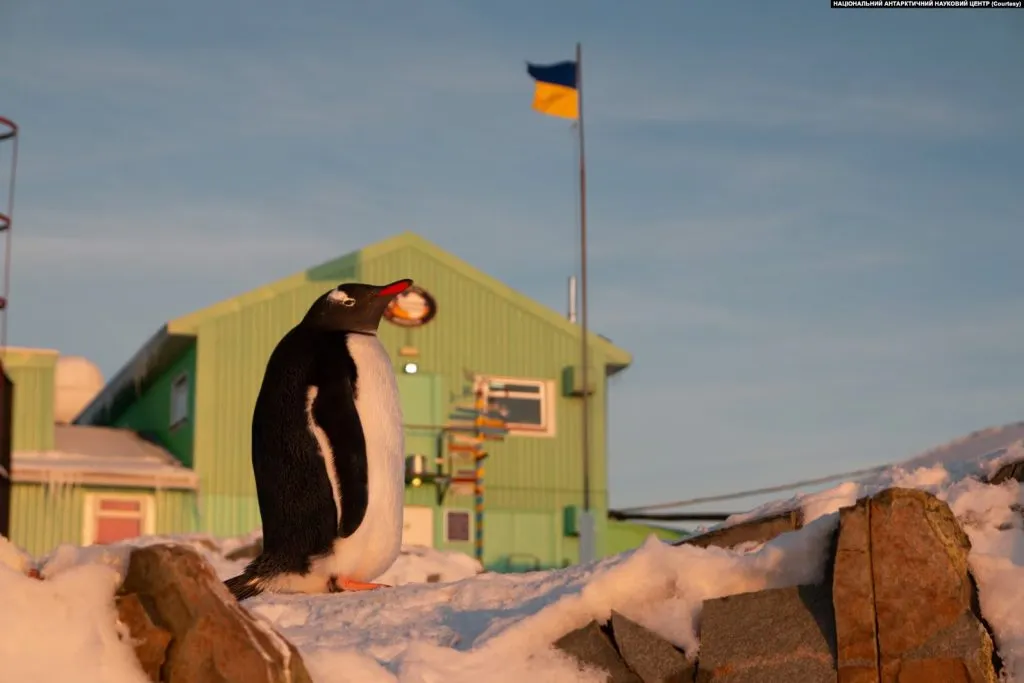
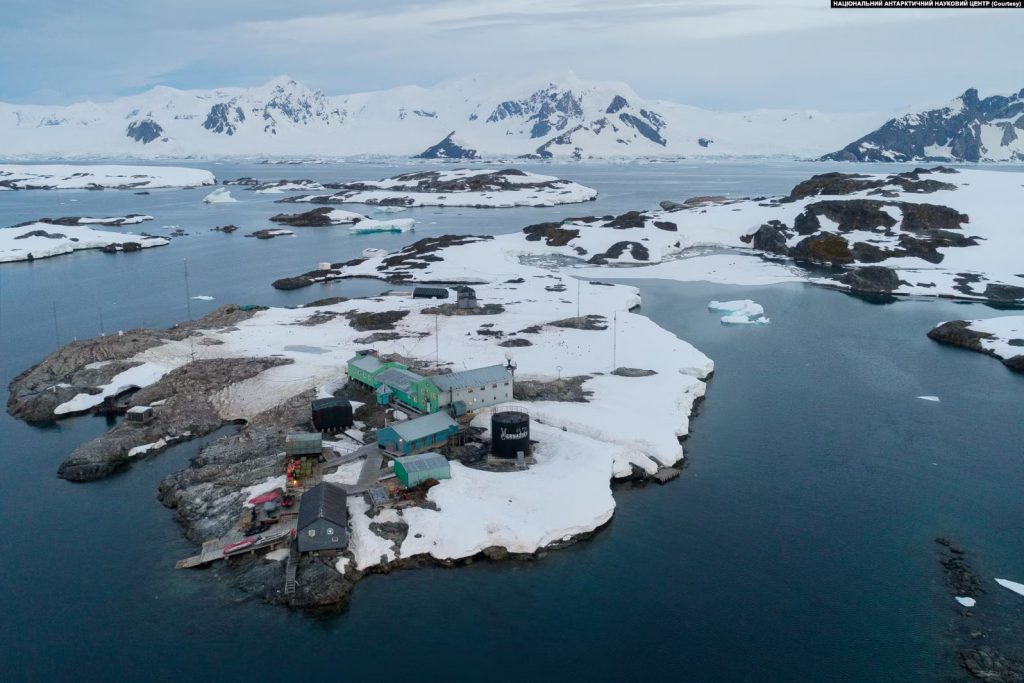
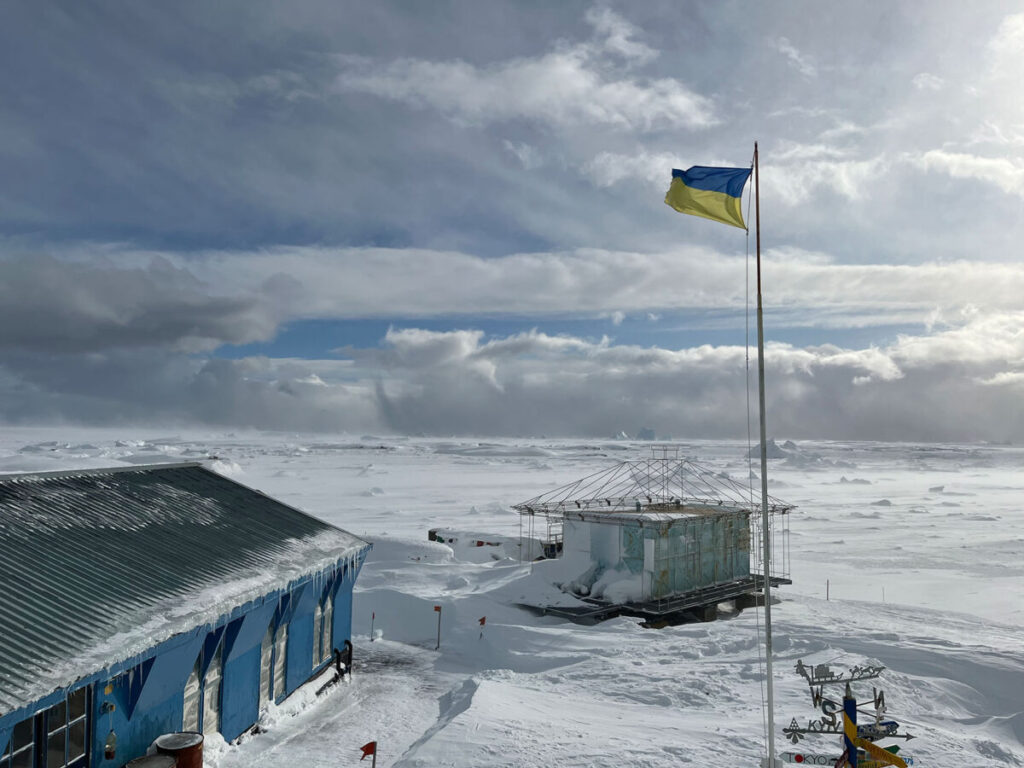
A glimpse of the Akademik Vernadsky station that hosts Ukrainian researchers
A Journey in Three Legs
Sergey learned in February 2024 that he would spend an entire year at Vernadsky station, surrounded by the stark Antarctic wilderness and its resident penguins – almost six months after his initial selection. His family and teammates celebrated the news with him.
For Kherson State Maritime Academy, Sergey’s departure as part of the 29th Ukrainian Antarctic Expedition is a momentous occasion. It demonstrates that its lecturers go beyond theory, seeking new horizons to enrich their teaching. Alumni and faculty at Kherson State University share that pride: they recall Sergey’s unwavering ambition, his refusal to be confined to lectures alone, and his belief that knowledge should serve Ukraine and the wider world.
“Sergey Yakushchenko is a shining example of passion for science and proof that the exact sciences open limitless opportunities,” – says Kherson State University Rector Oleksandr Spivakovsky. – “His lecturers remember him fondly as the choir’s student-leader – such is the breadth of his talents.”
The reality of his dream truly sank in only on departure day, when Sergey and twelve fellow expedition members embarked on their long journey, transferring between three modes of transport.
“We travelled by bus to Poland, then flew from Warsaw via Paris to Santiago, Chile, and finally reached Punta Arenas. There, the research vessel Noosphere awaited us for a six-day voyage to the station. On the morning of 21 March 2024, we arrived – and the handover began. Our predecessors spent weeks introducing us to the station, its routines and their hard-won experience. There was no time to acclimatize or fall ill: we immediately joined the scientific program, and it’s been exhilarating,” – he recalls.
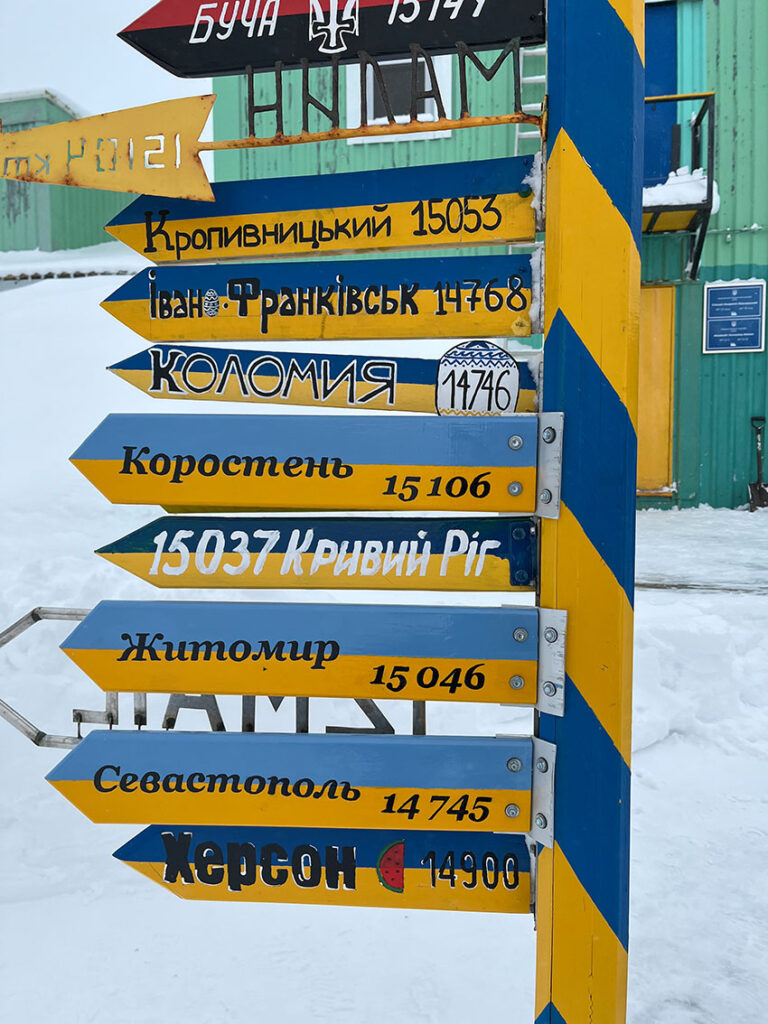
Each year, Vernadsky station hosts a 12–14-member expedition drawn from across Ukraine
A Planetary Shield: Monitoring the Ozone Layer
The expedition team comprises 14 members: nine scientists researching meteorology, geophysics and biology, plus five specialists responsible for station life-support – namely a doctor, a cook, a mechanical systems technician, a diesel-electrician, and a systems administrator.
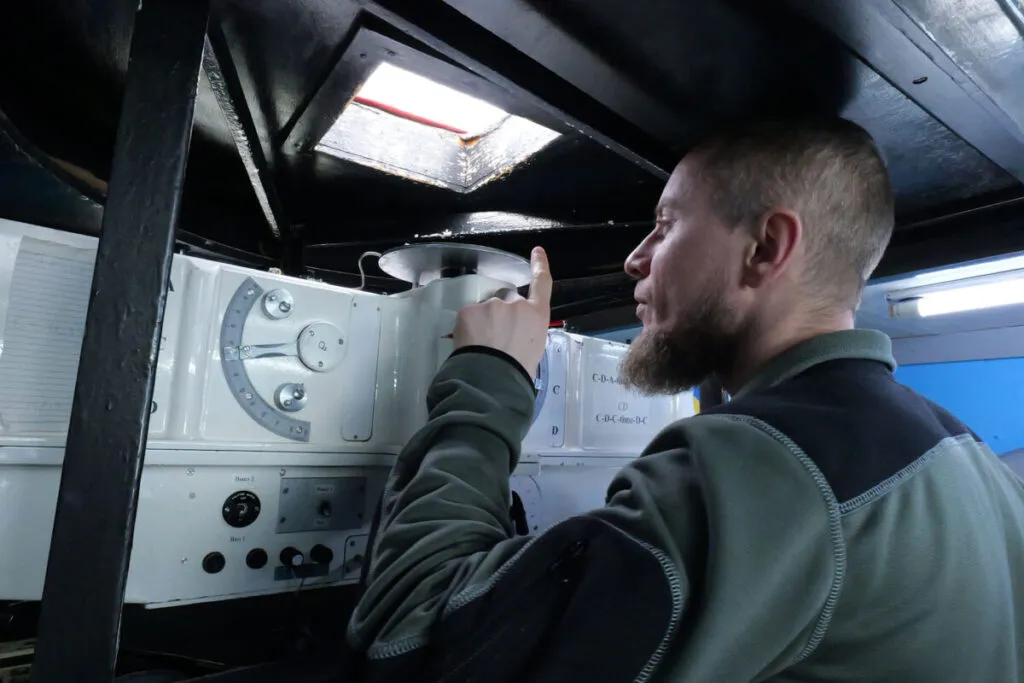
The ozone-monitoring specialist at work with the Dobson spectrophotometer in its dedicated observatory hut. Source: Sergey Yakushchenko
Sergey is one of three meteorologists and serves as the station’s ozonometrist. On a typical day he performs five readings – two before local noon, one around midday and two afterwards – but counts can soar to sixty measurements in a single 24-hour period during certain seasons or under particular weather regimes. Consequently, he often sacrifices sleep, meals and personal time.
“On the station’s attic level we set up the ozonometrist’s office. Our Dobson spectrophotometer sits beneath a special observation window. December brings the most readings, as daylight lasts over 20 hours,” – he explains.
Studying the ozone layer is crucial, for it acts as Earth’s protective shield: absorbing the bulk of harmful ultraviolet radiation. Its thickness averages 300–400 Dobson units (or millimetres, in conventional terms), while readings below 220 Dobson units define the infamous “ozone hole” – a level hazardous to living organisms.
“Without the ozone layer, all life on Earth would perish,” – Sergey warns. – “Whenever readings drop below 220 Dobson units, exposed skin needs high-factor sunscreen and everyone must wear UV-blocking goggles.”
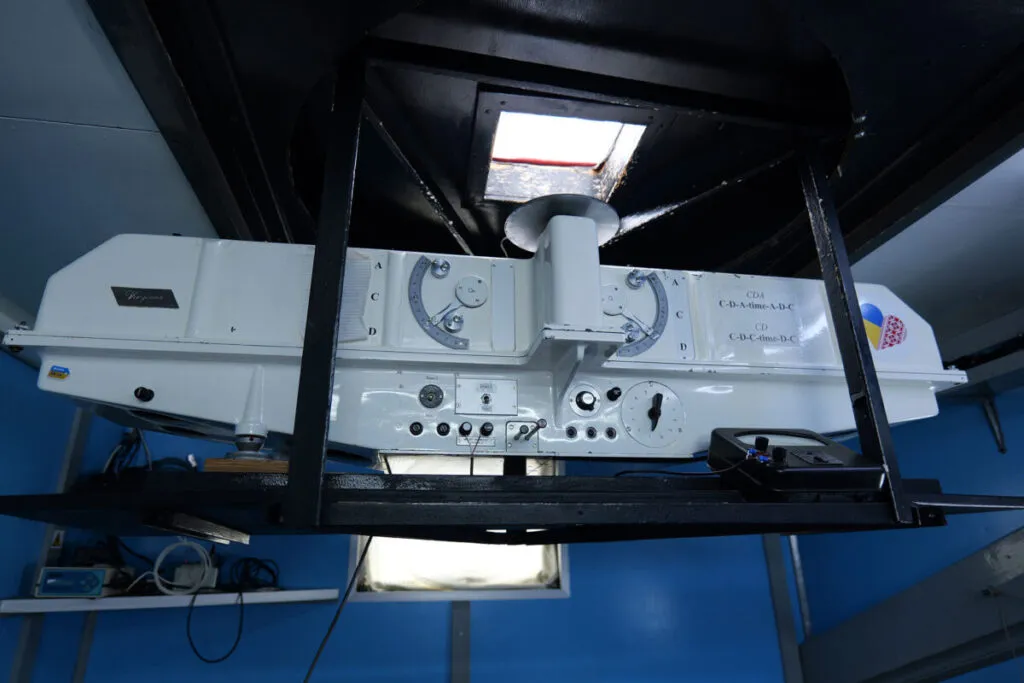
Ground-based monitoring complements satellite observations, validating their accuracy and covering regions beyond satellite reach. Source: Sergey Yakushchenko
Each day’s measurements are relayed both to Kyiv and to the British Antarctic Survey – the UK’s official polar research body. Analysts use this data to track the ozone layer’s gradual recovery.
From Montreal to the Horizon
On 16 September 1987, signatories of the Montreal Protocol committed to phasing out ozone-depleting substances—chiefly chlorofluorocarbons (CFCs). Ratified by every nation, the treaty curbed the rapid expansion of the ozone hole. Today, while CFCs remain the primary concern, ozone depletion can also arise from rocket launches, supersonic flights, solar cycles and volcanic eruptions.
Thousands of Kilometres, One Cause: Helping Ukraine’s Defenders
Though they no longer feel air-raid sirens or tremble at distant explosions, the 29th Expedition team follows events in Ukraine closely.
“We all have family, friends or colleagues on the front line. Thanks to internet and video links, we know what’s happening in our home towns. And we’ve been briefed that, should anything occur back home, we can’t intervene until April 2025,” – Sergey says.
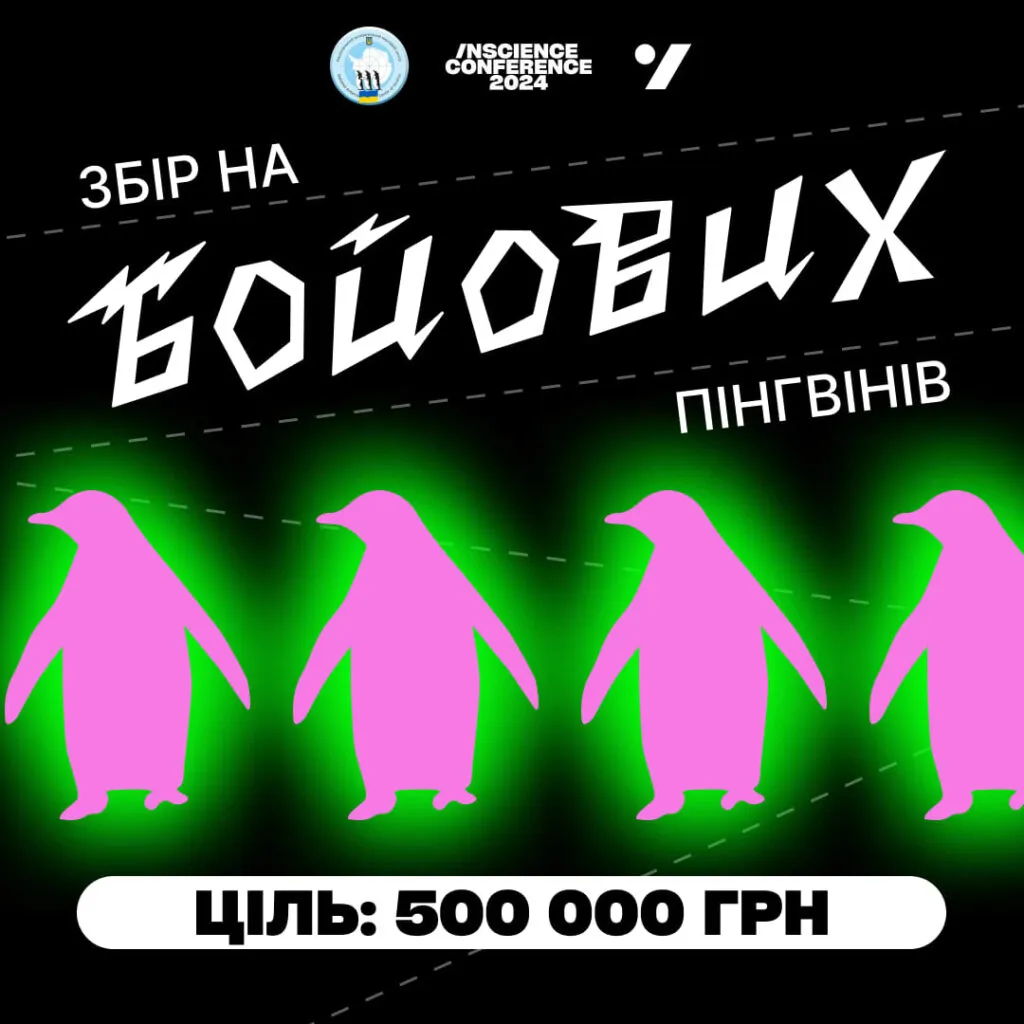
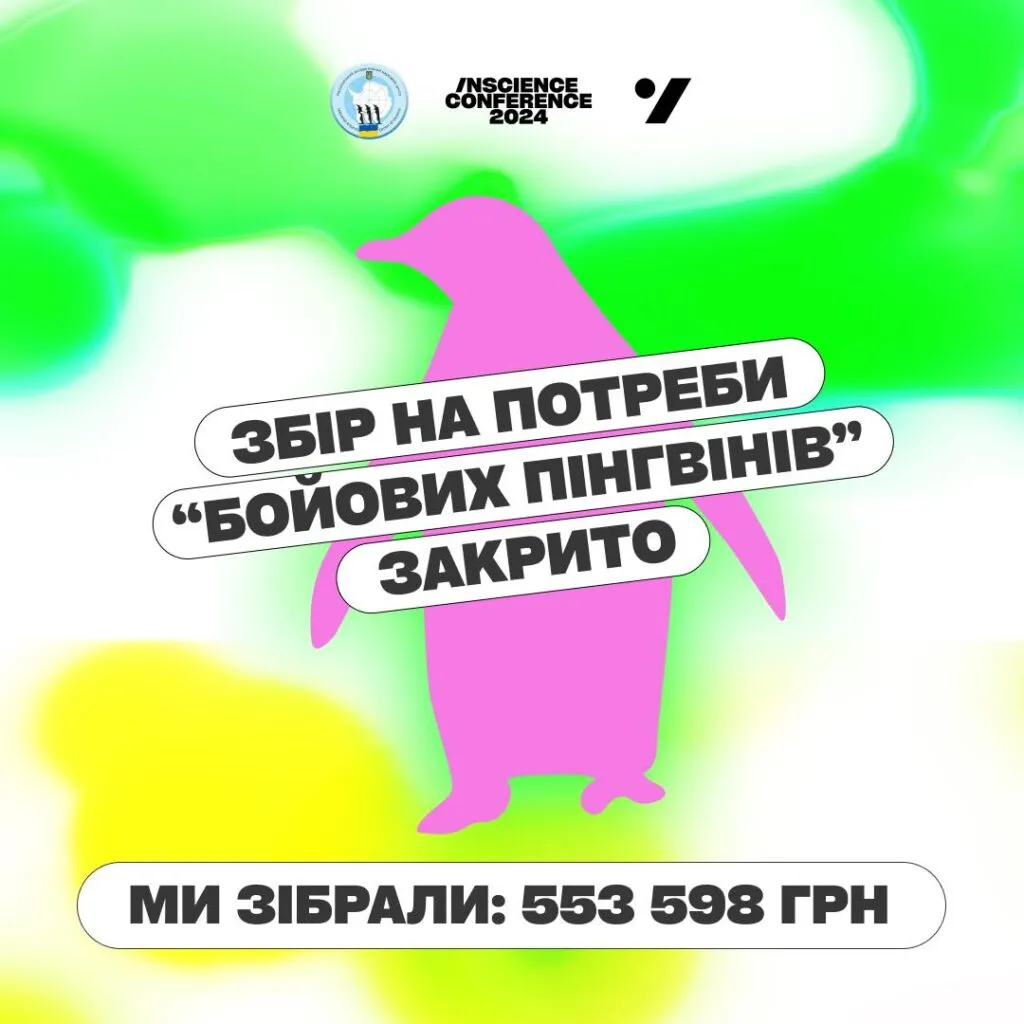
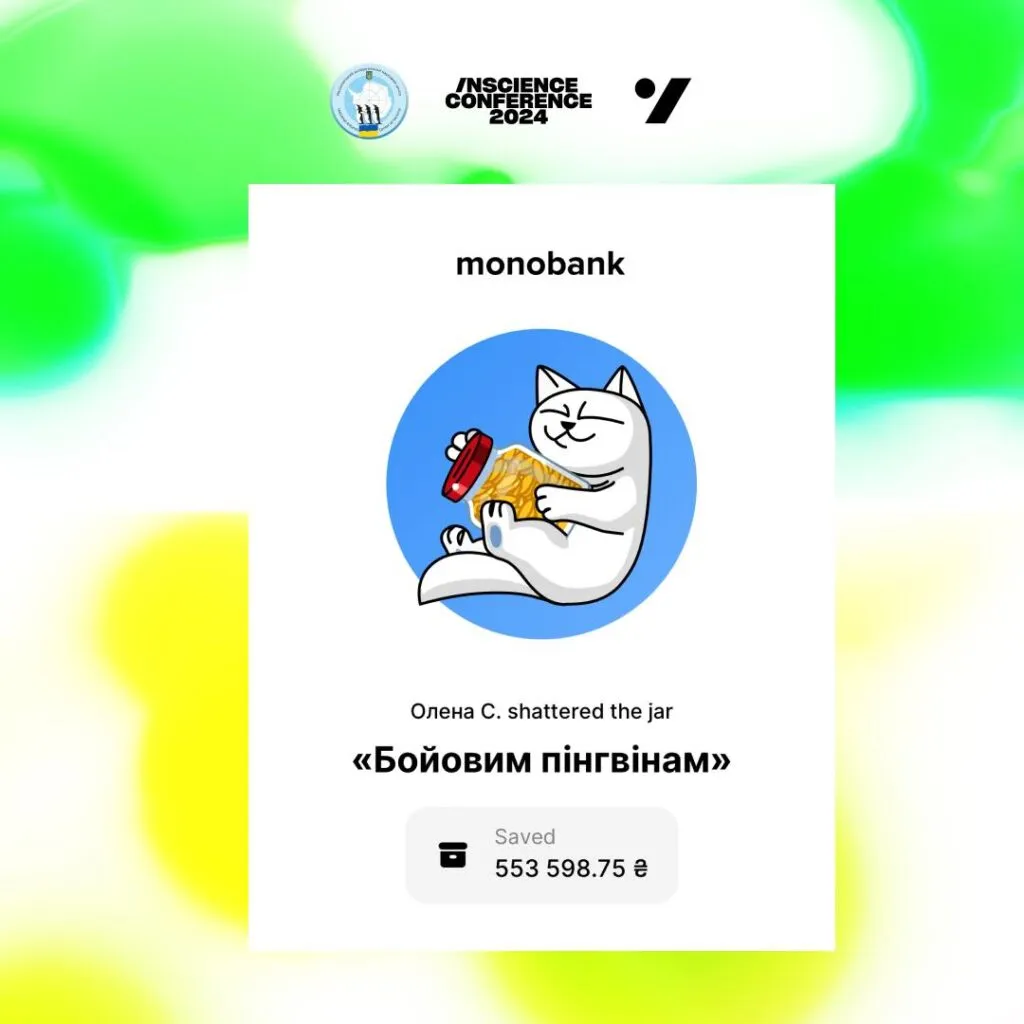
Special fundraising artwork created by the National Antarctic Scientific Center. Source: NANC
From the ice, Sergey and his colleagues support Ukraine’s Armed Forces through auctions, donations and calls to action. A recent charity auction by the National Antarctic Scientific Center and INSCIENCE raised UAH 553,598 to buy DJI Mavic 3 Pro drones, Starlink terminals, EcoFlow and Bandera Power charging stations, and trench-grade electronic-warfare kit for units in the Kharkiv, northern and southern sectors.
Their efforts have even inspired international backing. Norway’s Ukrainian Freedom Convoys, in partnership with Vernadsky station, fundraised to purchase a Toyota Land Cruiser for defenders. The keys were handed to Staff Sergeant Ihor Artemenko – formerly a 25th Expedition meteorologist – who now leads a communications unit on the Kharkiv front.
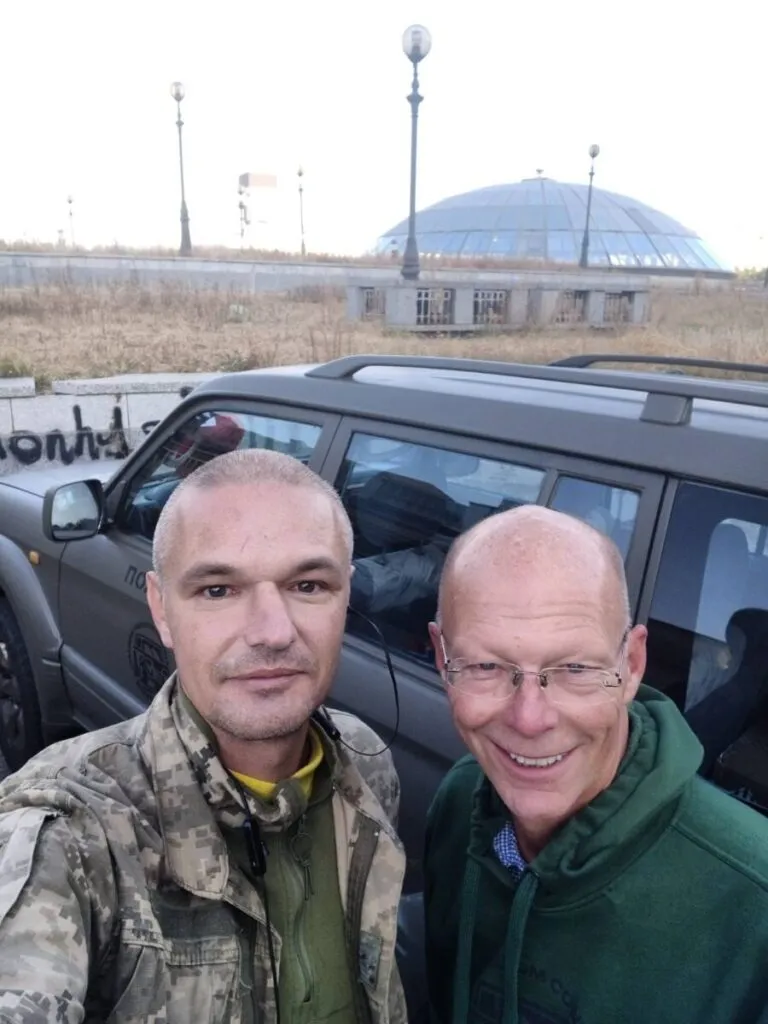
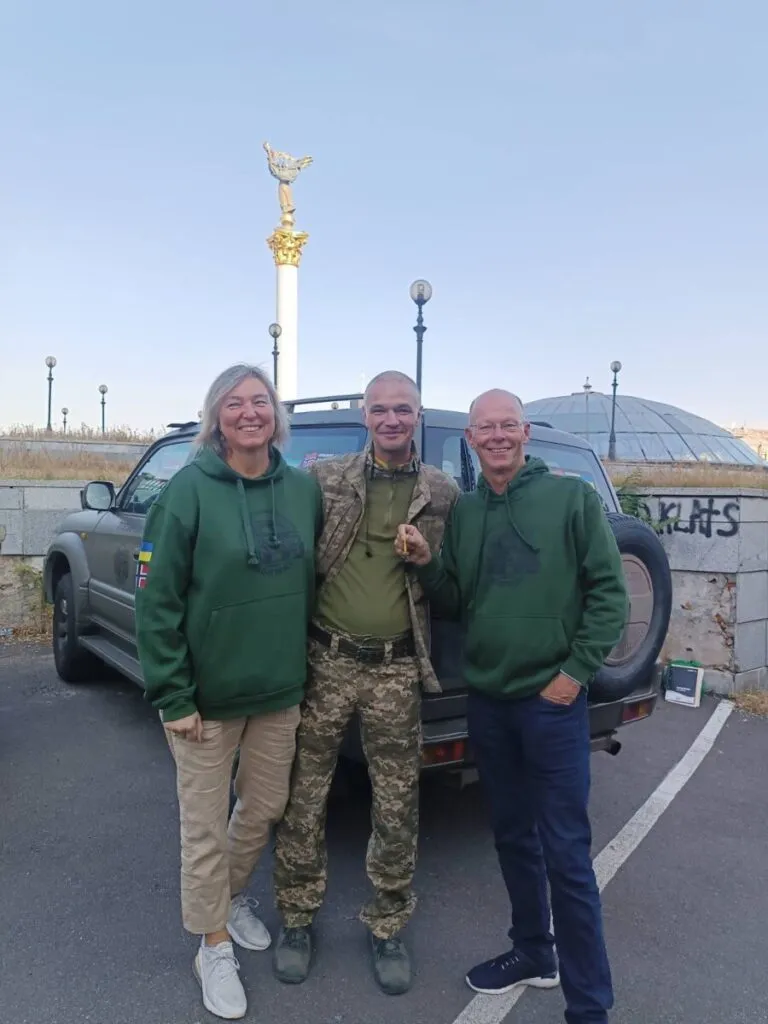
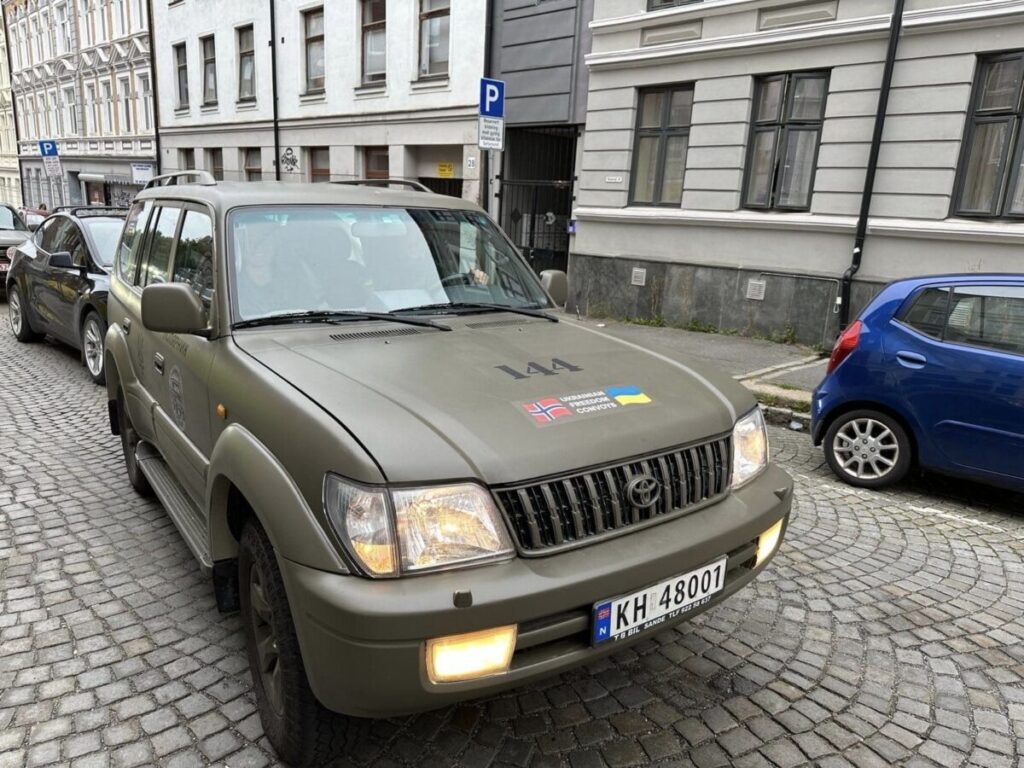
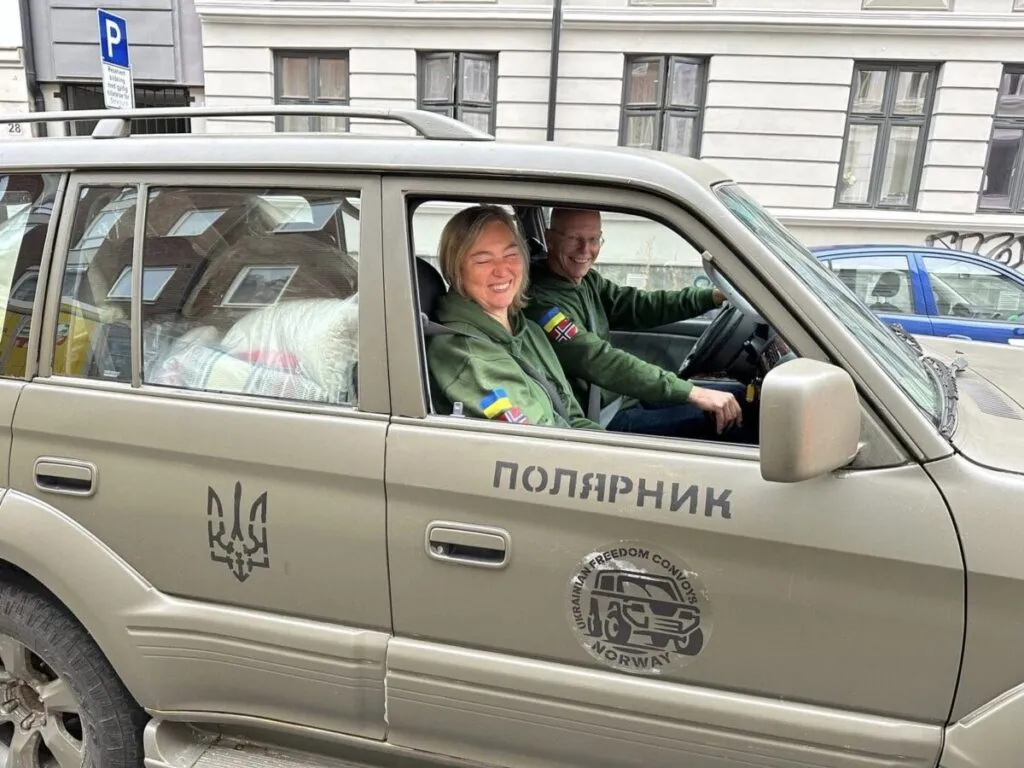
Norwegian volunteers in Kyiv, delivering the “Polarnik” Land Cruiser to Ukrainian troops. Source: NANC
Ozone Holidays and Penguin Guests
From 21 May to 21 July, the station observes “ozone holidays” – the Sun sits too low on the horizon for the Dobson spectrophotometer to function. During this interval, Sergey focuses on personal development, assists colleagues and finds moments to rest.
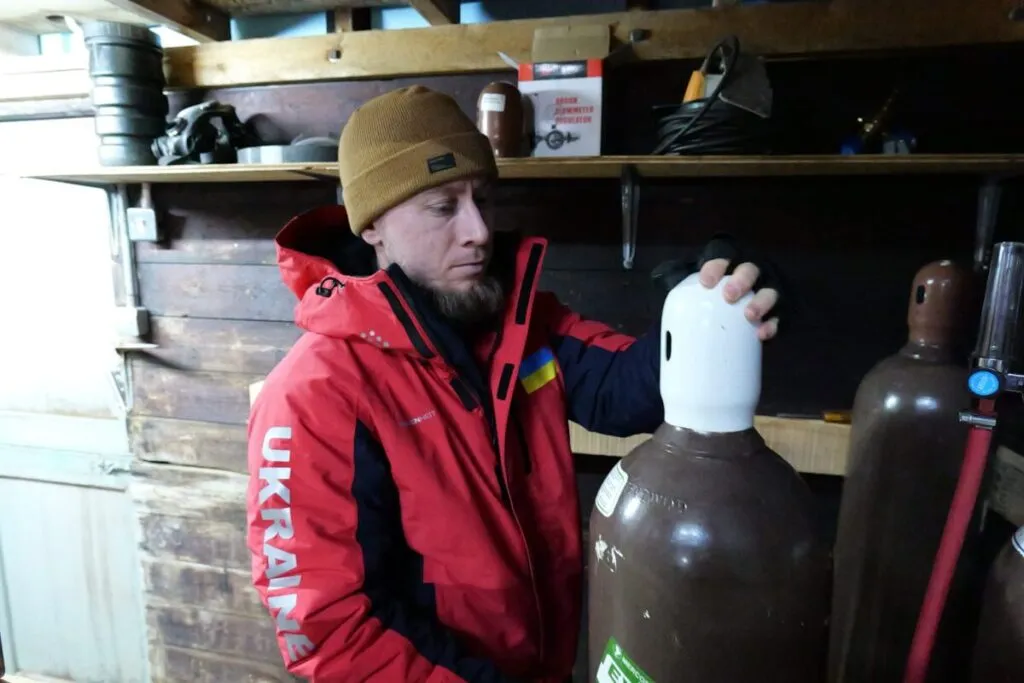
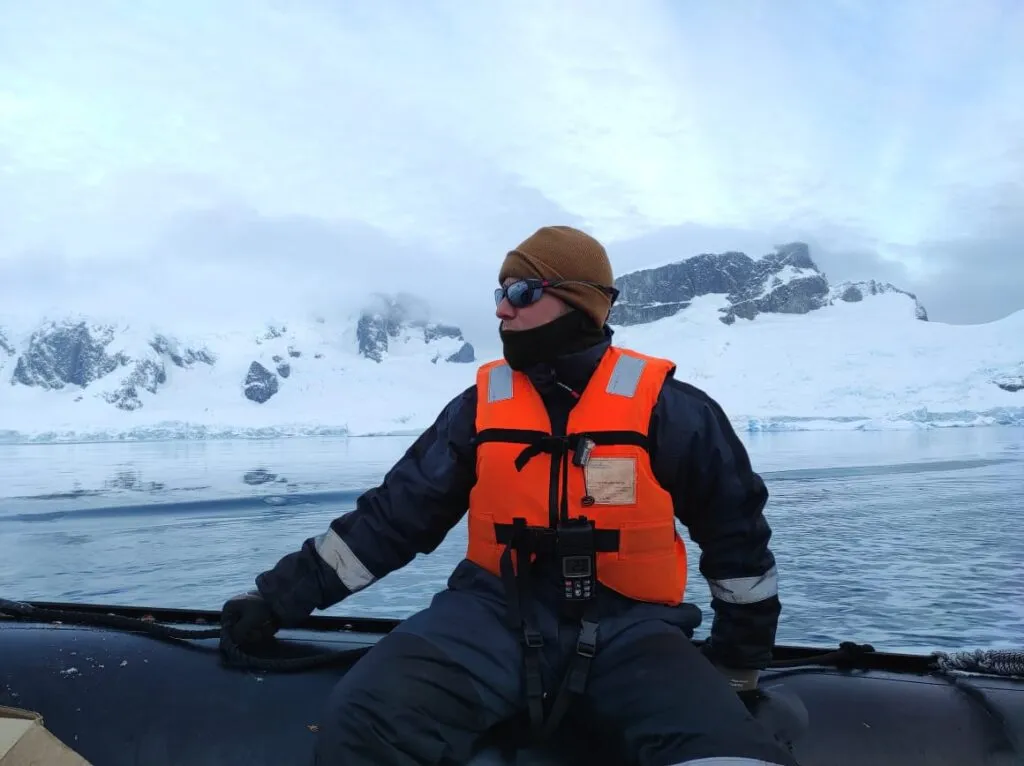
Sergey Yakushchenko helping with other research and savouring Antarctica’s beauty. Source: Sergey Yakushchenko
He describes the station community as “one big family”. Together they cook, clean and stand watch on day- and night-duty rosters. There are no shops here; the landscape is fixed – but nature itself is endlessly surprising. In May, the team witnessed vivid rainbows. Over the past two months, they’ve spotted nacreous clouds that glow with mother-of-pearl iridescence. Boat trips to neighbouring isles take their breath away.
Antarctic outreach remains a priority: the scientists lead online tours for schoolchildren across Ukraine, fostering curiosity about polar science.
Watch: Sergey’s virtual excursion for the New Ukrainian School
https://youtu.be/2QfrOtRyvKU
Life on Galindez Island
After half a year stationed on Marine Point, Galindez Island, Sergey has grown accustomed to both the climate and his unfeathered hosts. He even celebrated his 33rd birthday here. Ever self-effacing, he says he feels “a guest” among the penguins.
“From May, they move to warmer waters, but in October they slowly return. Last season biologists counted around 7,000 penguins here. They live in colonies; they’re the island’s true locals, and we are the visitors. When curious, they stroll onto the meteorological platform, inspecting our instruments with no regard for our readings,” – he laughs.
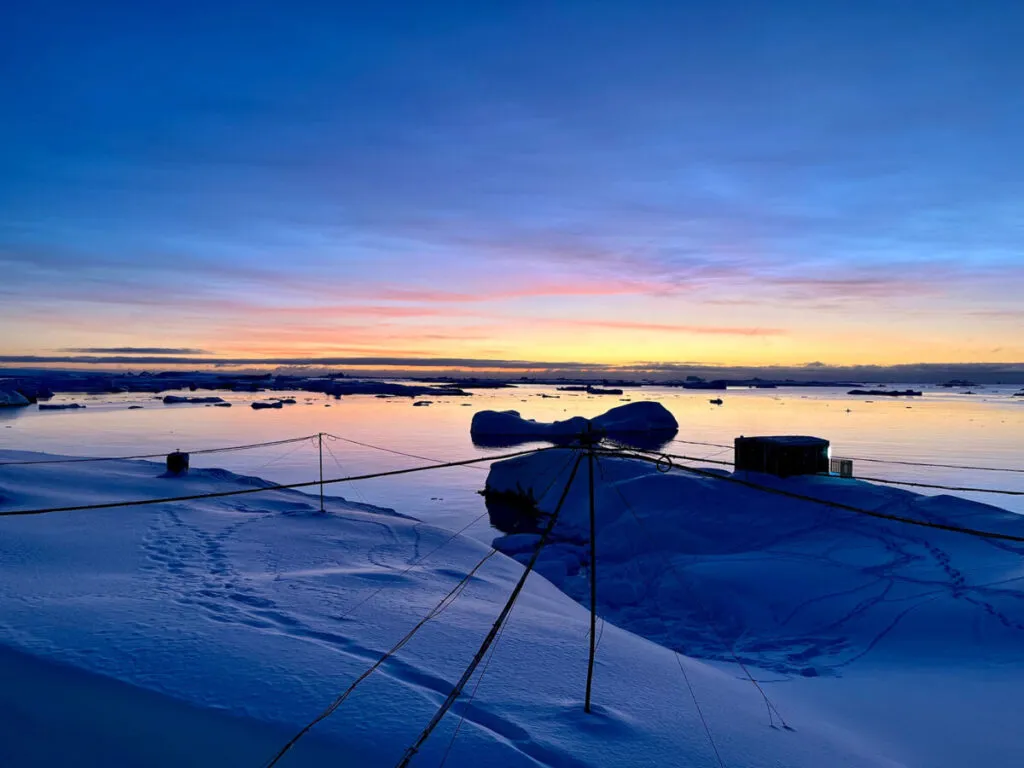
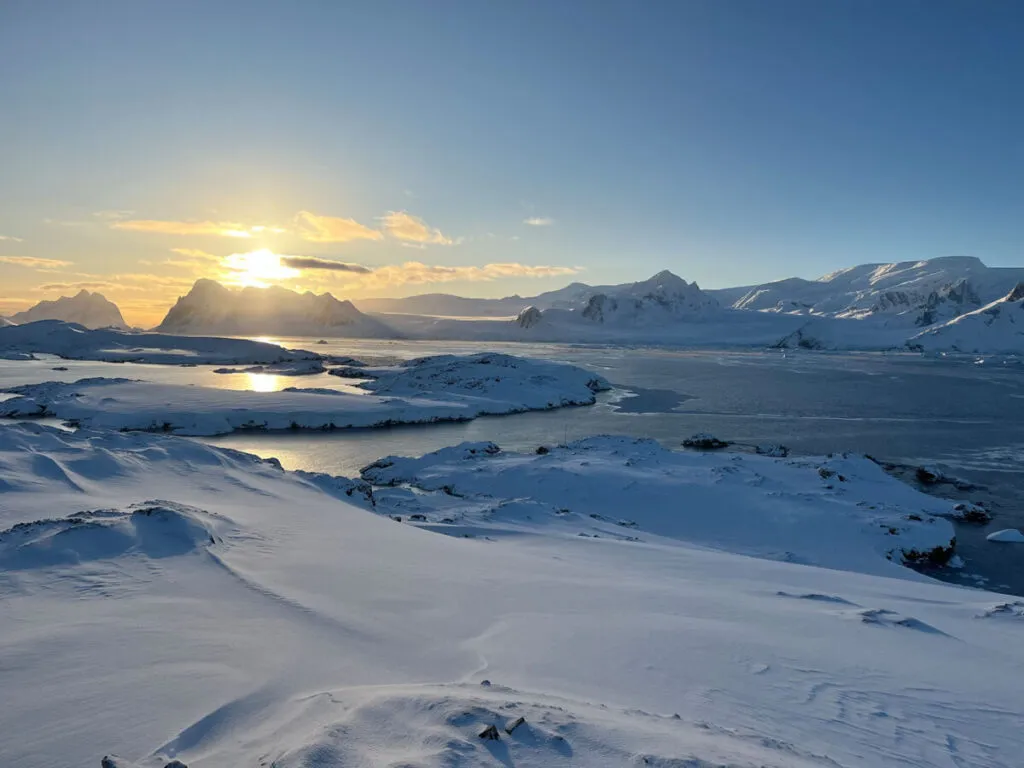
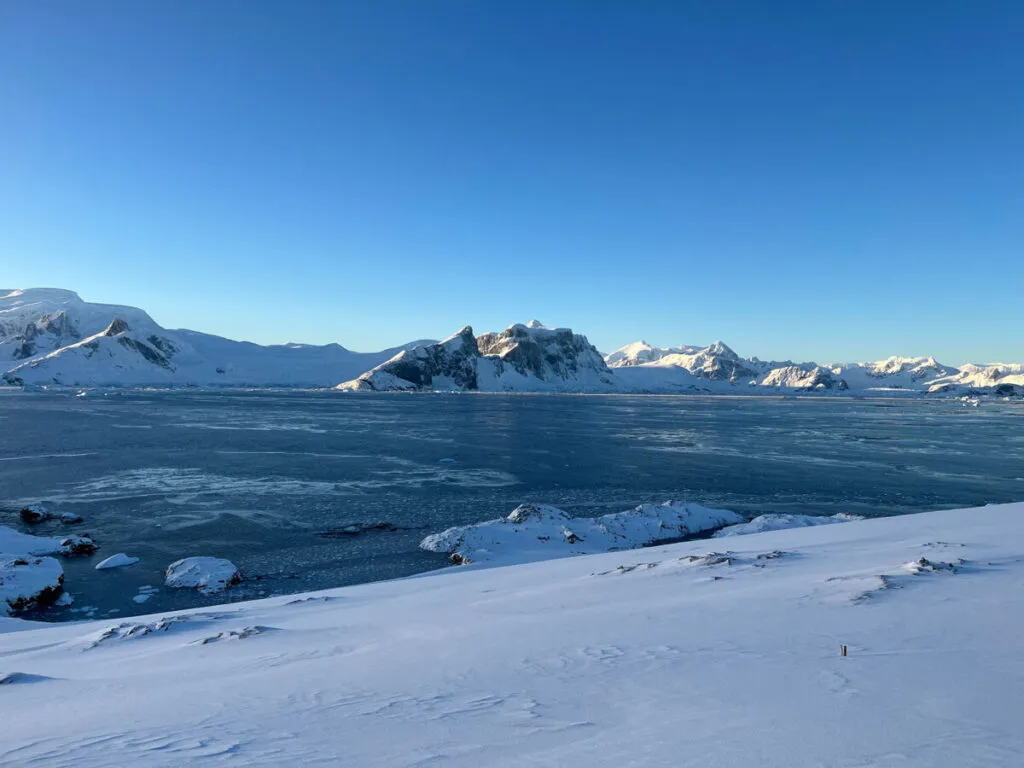
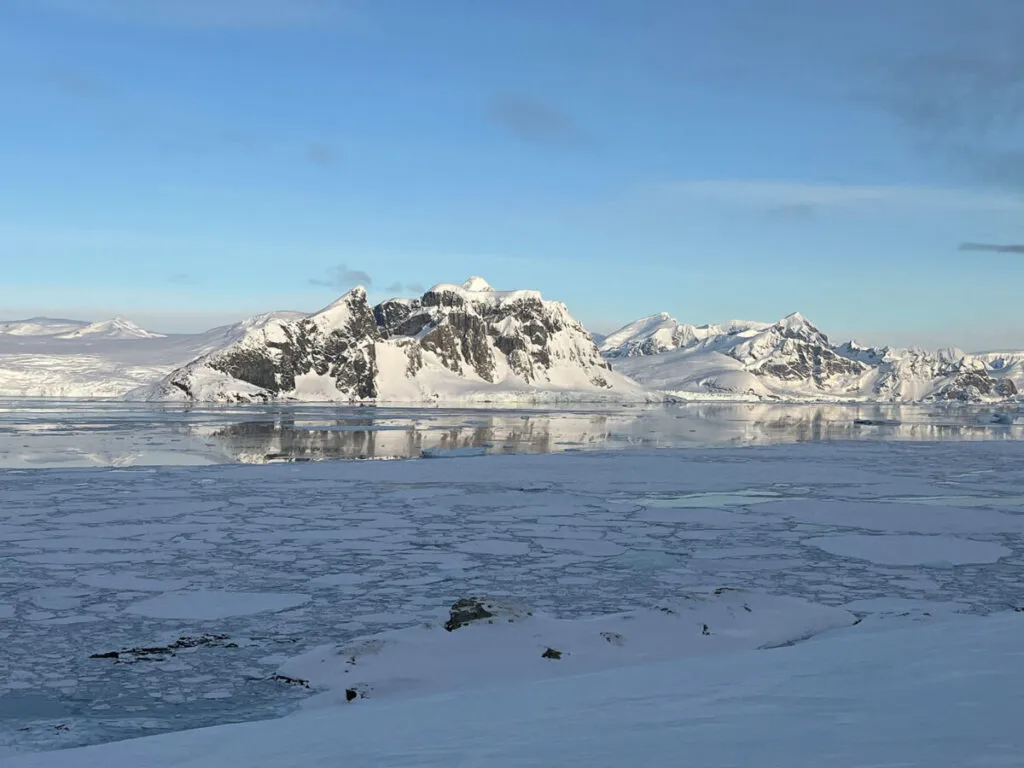
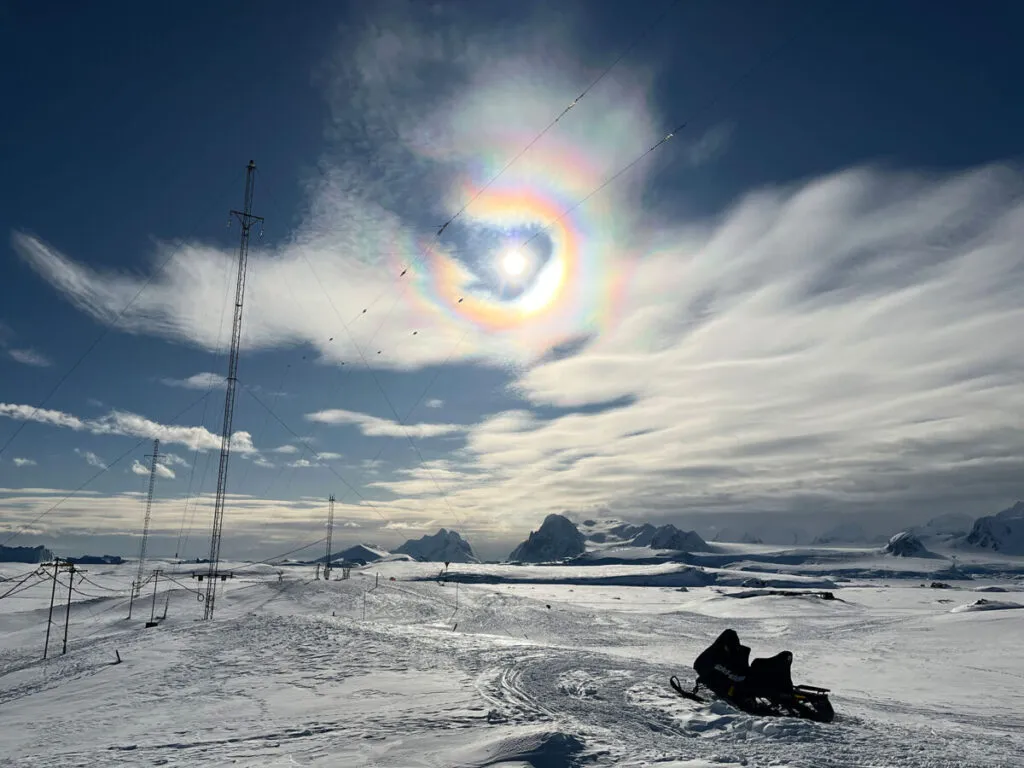
Antarctic splendor through the eyes of a Kherson native. Source: Sergey Yakushchenko
A Future Unwritten
Sergey Yakushchenko takes pride in being part of this vast scientific family, in having set foot on Vernadsky station and contributed to our understanding of the planet. Will he apply for future expeditions?
“With a war still raging at home, planning for the future is uncertain. But if the chance arises, I wouldn’t refuse a return to Antarctica. I’m now part of our country’s public story. It matters to me that I’ve made a mark in history – one that benefits the state, science and generations to come,” – he concludes.
Author: Iryna Miezientseva